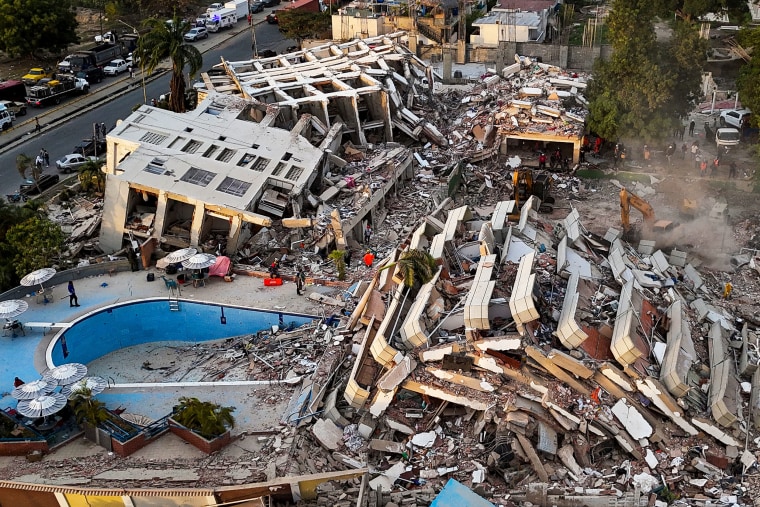
On the evening of 24 June 2026, northern Venezuela was struck by two major earthquakes 39 seconds apart — a rare “doublet” that became the country’s deadliest natural disaster in a generation. For the structural dynamics community, the event is a case study in nearly every mechanism we teach: rupture directivity, soft-soil site amplification, resonance with building fundamental periods, soft-story collapse, non-ductile concrete, and the accumulated-damage problem of back-to-back shaking. This post summarizes the event and the lessons learned, with the caveat that reconnaissance is ongoing and figures are still evolving.
1. The Event
At 22:04:33 UTC (6:04 PM local), a magnitude 7.2 earthquake struck near San Felipe in Yaracuy state, roughly 160 km west of Caracas, at a focal depth of about 20.3 km. Thirty-nine seconds later, at 22:05:12 UTC, a magnitude 7.5 mainshock ruptured from essentially the same epicentral area near Yumare, at a shallower depth of about 10 km. The USGS classifies the pair as a doublet — two earthquakes of similar magnitude, nearly coincident in time and location — and formally treats the 7.2 as a foreshock of the 7.5.
The mainshock was the strongest earthquake in Venezuela since 1900. The human toll has been severe: as of 9 July, the confirmed death toll stood at 3,889, with more than 16,000 injured and tens of thousands reported missing across various registries. Nearly 800 buildings collapsed, of which 189 were completely leveled, with damage concentrated in Caracas and, catastrophically, in coastal La Guaira state. The UN Office for Disaster Risk Reduction has estimated direct damages around $37 billion. USGS PAGER projected that final fatalities could exceed 10,000.
2. Tectonic Setting and Doublet Mechanics
Northern Venezuela sits in a broad transpressional boundary zone between the Caribbean and South American plates. Rather than a single fault, the boundary is a distributed right-lateral strike-slip system — the Boconó–San Sebastián–El Pilar system — running more than 1,300 km from the Venezuelan Andes to Trinidad and accommodating roughly 10 mm/yr of dextral plate motion. The doublet occurred where the NE-trending Boconó system converges with the E-W San Sebastián system, one of the most structurally complex corners of the plate boundary.
The prevailing interpretation is static and dynamic stress triggering: the first rupture raised the Coulomb stress on an adjacent fault segment closer to the surface, and 39 seconds later that segment failed. Doublets are uncommon precisely because this requires two segments both near critical stress. The 2023 Kahramanmaraş (Turkey/Syria) sequence — M7.8 followed nine hours later by M7.5 — is the nearest recent analog, and it killed nearly 60,000 people.
The finite fault models are instructive. The USGS model for the M7.5 indicates a rupture roughly 175 km long by 20 km wide, propagating unilaterally eastward from the epicenter along the coast — that is, toward the Caracas–La Guaira urban corridor. Italy’s INGV, inverting Sentinel-1 InSAR surface displacement, found the ground deformation from the two events indistinguishable and modeled them as a single composite Mw 7.6 rupture with two episodes of energy release, slipping over a zone roughly 210 km by 30 km extending from Morón to northeast of Caracas. Either way, the rupture ran straight at the population.
3. Why the Ground Motion Was So Damaging
Three factors compounded:
Shallow Depth
At 10–20 km focal depth, the crustal rupture delivered its energy directly to the surface with little geometric attenuation, unlike deeper subduction events that spread and dissipate energy over distance.
Rupture Directivity
Because the rupture propagated unilaterally toward the east, sites in the forward direction — La Guaira and Caracas — received the seismic radiation compressed into a shorter, higher-amplitude velocity pulse. Forward-directivity pulses are particularly punishing because they concentrate the energy demand into one or two large displacement cycles rather than many small ones.
Soft-Soil Site Amplification and Resonance
Much of La Guaira and parts of Caracas sit on soft, saturated alluvium and reclaimed land, trapped between the coastal mountains and the sea. Soft soil columns amplify ground motion and lengthen its predominant period. Using the familiar rule of thumb for the fundamental period of an N-story building,
a 5–15 story building has a fundamental period of roughly 0.5–1.5 seconds — squarely in the band where deep soft-soil sites concentrate their amplified response. When the site period matches the structure’s period, the building is driven near resonance, and displacement demand grows with each cycle like a child’s swing pushed at exactly the right moment. Local engineers noted this mechanism explicitly in La Guaira, where the loose sand and gravel slowed the seismic waves while increasing their amplitude, and where partial soil softening under strong shaking made matters worse. Microsoft’s AI for Good Lab, analyzing satellite imagery of Catia La Mar, estimated that about a third of that city’s nearly 30,000 structures were damaged.
4. Structural Failure Modes
The collapse inventory reads like a checklist of known seismic vulnerabilities:
Soft-Story (Weak-Story) Collapse
Many collapsed buildings had open ground floors — garages, retail, parking — with fewer walls and columns than the stories above. The lateral stiffness discontinuity concentrates the entire interstory drift demand into that one level. When its columns fail, the floors above pancake. Stanford’s Eduardo Miranda noted that soft stories are prevalent in Venezuela and, combined with soft soils, are a recipe for collapse. This is the same failure mode that dominated the 1967 Caracas earthquake and countless events since.
Non-Ductile Reinforced Concrete
A large fraction of the Caracas building stock was erected in the 1950s–60s boom, before modern seismic detailing. These frames lack the confinement reinforcement, joint detailing, and “strong column, weak beam” capacity design that lets modern structures deform inelastically without losing gravity load capacity. The intended modern behavior is that plastic hinges form in the beams, dissipating energy hysteretically, while columns remain elastic and the gravity system survives. Without that hierarchy, hinges form in columns, and a column hinge is a story-collapse mechanism.
Code Adequacy vs. Code Enforcement
Venezuela revised its seismic code after the 1967 Caracas earthquake, and the current standard (COVENIN 1756) incorporates modern provisions aligned with international practice, including ACI-style concrete detailing. The NZSEE reconnaissance team’s early comparison of the code’s PGA zonation against the USGS ShakeMap contours for the doublet will be an important benchmark of whether the mapped hazard was exceeded. But the dominant story appears to be enforcement and stock vulnerability, not code content: engineers report that post-1999 public housing was built rapidly with limited inspection and quality control, that older buildings were never retrofitted, and — most troubling — that at least a few recently designed, code-conforming buildings also collapsed, which local engineers say warrants a review of design and construction practice itself.
5. The Doublet Problem: Damage Accumulation and Low-Cycle Fatigue
The 39-second spacing deserves its own discussion, because it turns the event into a structural damage-accumulation problem.
A code-designed building survives a major earthquake by responding inelastically — it trades permanent damage for survival. After the first shock, many structures were standing but degraded: cracked concrete, yielded reinforcement, reduced stiffness, partially exhausted ductility capacity. The ductility demand ratio
had already consumed a substantial share of each structure’s inelastic budget when the larger mainshock arrived 39 seconds later — before any occupant could evacuate, and before the structure’s degraded, period-lengthened state could be assessed. A softened structure has a longer natural period, which on a soft-soil site can shift it further into the amplified band rather than out of it.
This is fundamentally a low-cycle fatigue problem in the reinforcing steel and concrete: a small number of very large inelastic strain reversals, with damage accumulating in a Coffin–Manson sense rather than a high-cycle S-N sense. Cumulative damage concepts from fatigue analysis — Miner-type summation over inelastic excursions — map directly onto why doublets and strong aftershock sequences are disproportionately lethal compared to a single shock of the same peak intensity. The Turkey 2023 doublet showed the same signature: buildings weakened by the first event were finished off by the second.
For readers of this blog, the connection to our usual territory is direct: this is the response-spectrum and damage-accumulation problem, with the “test sequence” applied twice to a specimen that was only qualified — at best — for one exposure.
6. Lessons Learned
1. Retrofit the existing stock — the code only protects new construction
The deadliest buildings were built before, or outside, the modern code. Seismic risk reduction in a country like Venezuela is overwhelmingly a retrofit problem: adding shear walls or bracing, jacketing columns, closing soft stories, or — for critical facilities — base isolation and supplemental energy dissipation. Bristol’s Raffaele De Risi emphasized that base-isolated hospitals and power plants can remain not merely standing but operational, a performance level demonstrated repeatedly in recent earthquakes.
2. Soft stories are a solved problem that keeps killing people
The engineering fixes (moment frames or shear walls at the open level) are well understood and relatively economical. Jurisdictions like Los Angeles and San Francisco have mandatory soft-story retrofit ordinances. Screening a building inventory for this single configuration flaw is among the highest-leverage seismic interventions available.
3. Site effects belong in zonation and in enforcement
Building dense mid-rise housing on soft coastal alluvium concentrates period-matched demand exactly where the vulnerable buildings are. Microzonation maps existed for Caracas; the lesson is that microzonation must flow through to design forces and land-use decisions, not remain an academic product.
4. Doublets and aftershocks demand damage-accumulation thinking
Design and assessment frameworks largely assume one design-level event. Mainshock-damaged buildings need rapid tagging (safe / restricted / unsafe) before reoccupation, and performance-based methods should account for reduced capacity under aftershock sequences. Research codification of “mainshock-aftershock” fragility is an active area, and Venezuela 2026 will become a benchmark dataset.
5. Quality control and inspection are structural elements
Reports of rapid, poorly inspected public housing construction, corrosion, and absent quality control describe capacity that existed on paper but not in the field. A code without inspection is a suggestion. The collapse of some reportedly code-conforming recent buildings also argues for forensic review of design practice, materials, and as-built conformance — the reconnaissance reports over the next year will be essential reading.
6. Post-event engineering mobilization matters
Venezuelan engineers and universities offered rapid assessment support that was slow to be taken up; meanwhile residents reoccupied or sheltered near damaged structures under ongoing aftershocks. Pre-arranged protocols for engineer-led rapid safety evaluation (ATC-20 style) are as much a preparedness item as search-and-rescue capacity.
7. Closing Thoughts
Nothing about the physics of 24 June was exotic. Strike-slip rupture on a known plate boundary, directivity toward a city, soft-soil amplification, resonance with mid-rise periods, soft stories, non-ductile concrete, and a second shock landing on damaged structures — every mechanism was documented in prior earthquakes and taught in every earthquake engineering course. The doublet’s 39-second spacing added a cruel damage-accumulation twist, but the dominant variable, as always, was the vulnerability of the built environment. Earthquakes don’t kill people; buildings do. The engineering community’s job is to make sure the next event on this fault system — and there will be one — meets a different building stock.
We will revisit this event as the formal reconnaissance reports (NZSEE VERT, EERI, and others) and strong-motion datasets become available, particularly the recorded response spectra versus the COVENIN 1756 design spectra.
Sources and Further Reading
- USGS event pages: M7.2 foreshock (us6000t7zc) and M7.5 mainshock (us6000t7zp), earthquake.usgs.gov
- NZSEE Venezuela Earthquake Reconnaissance Team (VERT) Report, Version 1.0, July 2026, nzsee.org.nz
- Eos: Venezuelan Earthquakes Struck in a Complex Zone of Faults, eos.org
- The Conversation: Expert Q&A with Raffaele De Risi (University of Bristol) on the building collapses, theconversation.com
- Loughborough University press briefing (Dr. Andre Jesus, structural dynamics) on directivity and site effects, lboro.ac.uk
- Miyamoto International: Venezuela’s Strongest Earthquake in 125 Years, miyamotointernational.com
- AP News: Older buildings and substandard construction left Venezuela vulnerable, via ABC News
- Reuters: The construction failures and risky geography behind Venezuela’s quake tragedy
- Wikipedia: 2026 Venezuela earthquakes (aggregated casualty, damage, and INGV finite fault details), en.wikipedia.org
Related material: our September 2026 course series covers seismic analysis and shock response spectra, and the free ebooks at vibrationdata.com/ebooks include references on shock and vibration response spectra and fatigue damage accumulation.
📌 Related Earthquake Engineering Knowledge Hub
This article is featured in our main Earthquake Engineering & Structural Dynamics Hub . Visit the hub to explore related articles on shock response spectra, time history analysis, seismic equipment qualification, and structural case studies.