A recurring question in Central and Eastern North America (CENA) seismic qualification goes something like this: the site-specific ground motion exceeds the IEEE 693 required response spectrum above 10 Hz, sometimes by a factor of two to four. Does that mean the equipment is unqualified?
The short answer is that high-frequency content is a functionality concern, not a structural-integrity concern — with anchorage and stiff connection details as the notable exception. That conclusion is not merely an argument from physics. It is the conclusion the nuclear industry reached after roughly two decades of debate, backed by a full-scale empirical test that nobody wanted to run.
The North Anna Experiment
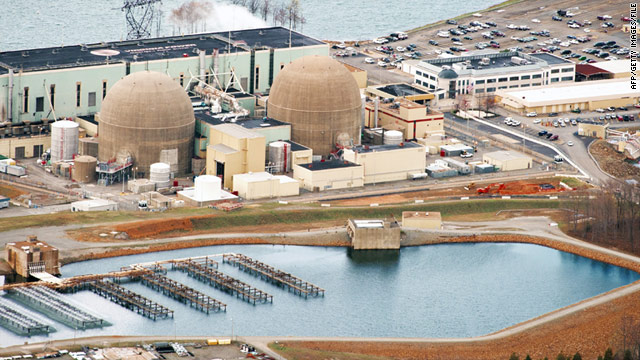
On August 23, 2011, the M5.8 Mineral, Virginia earthquake shook the North Anna Power Station. The recorded ground motion exceeded the plant design response spectrum above approximately 10 Hz by a wide margin. This was the CENA high-frequency scenario, delivered without a proposal or a budget.
Post-event walkdowns and inspections found essentially no structural damage. What damage did occur was confined to non-structural items: insulation, some relay chatter, a handful of anchorage issues. No load-carrying structure failed.
That result drove EPRI 1015109 and the subsequent NEI/EPRI high-frequency screening guidance, which concludes that content above roughly 10 Hz can be screened out for structural-integrity purposes. What cannot be screened out are acceleration-sensitive functional devices — relays, contactors, breakers, control switches — where the failure mode is chatter or trip, not fracture.
The distinction that matters: a component either carries load or performs a function. High-frequency content threatens the second category and largely spares the first. Conflating the two is the source of most of the confusion in this topic.
Why Displacement Governs
For a linear single-degree-of-freedom system, the relative displacement is
$$Z \approx \frac{SA}{\omega^2}$$
The $\omega^2$ in the denominator is the whole argument. Consider a 1 g input at two frequencies:
| Frequency | Input | Relative Displacement |
|---|---|---|
| 2 Hz | 1 g | ≈ 0.6 inch |
| 20 Hz | 1 g | ≈ 0.006 inch |
A factor of 100. Stress in a flexure-dominated component tracks relative displacement, not acceleration. A spectacular high-frequency acceleration spike therefore produces trivial bending stress.
This matters because substation equipment failures in real earthquakes are overwhelmingly bending failures: porcelain bushings, insulator columns, support structures. All displacement-governed.
The Second Reason: The Modes Are Not There
The displacement argument is the one usually offered, but the stronger argument is simpler. Most substation equipment — bushings, disconnect switches, surge arresters, CCVTs — has fundamental frequencies in the 1 to 10 Hz range, often below 5 Hz for tall porcelain columns.
IEEE 693’s spectrum is shaped the way it is precisely because that is where the equipment lives. High-frequency ground motion has nothing to couple into. You cannot damage a mode you do not excite.
Where the “No Concern” Conclusion Needs Qualification
Five cases, in rough order of practical importance.
1. Anchorage and Connection Details
This is the single most likely place for CENA high-frequency content to cause real trouble. Anchor bolts, base plates, welded connections, and bolted equipment-to-support interfaces are stiff load paths with effective frequencies of 20 to 50 Hz or higher — squarely in the elevated region of the CENA spectrum.
Critically, failure here is force-driven rather than displacement-driven. The $1/\omega^2$ protection does not apply. Bolt tension, shear, and weld stress scale with the transmitted force, and the transmitted force scales with acceleration.
2. Brittle Components
Porcelain has essentially no ductility and no meaningful energy dissipation. The concern is not fatigue in the usual sense — an earthquake supplies far too few cycles — but that a brittle material fails at whatever peak stress arrives first, independent of duration. One large cycle and the part is gone.
That said, the displacement argument still governs the stress magnitude, so this remains a low-probability concern unless a local high-frequency mode carries meaningful mass participation.
3. Multi-Supported and Secondary Systems
Rigid conductor bus, jumpers, and equipment-to-equipment connections can have local high-frequency modes and are sensitive to differential motion between supports. These deserve an explicit check rather than a blanket screen.
4. Small, Stiff Mounted Subassemblies
Junction boxes, mechanism housings, cabinet-mounted internals. These can sit at 20 to 40 Hz and are physically fragile even when they are not “structural” in the load-path sense.
5. Amplification Through the Support Structure
Equipment frequently sits on a steel frame. Even where the free-field high-frequency content is modest in absolute terms, a stiff frame can amplify it before it reaches the equipment interface. In-structure response spectra deserve a look; assuming the ground spectrum applies at the equipment mounting point is optimistic.
The IEEE 693 Mismatch, Specifically
The IEEE 693 required response spectrum for High seismic qualification is anchored at 0.5 g PGA with the spectral peak in the 1 to 8 Hz range. For CENA sites this can genuinely underrepresent the input above 10 Hz — sometimes by a factor of 2 to 4 in spectral acceleration — while simultaneously being conservative below 5 Hz.
The practical consequence is asymmetric. Equipment qualified to IEEE 693 High is likely fine structurally at a CENA site. But the qualification shake-table test itself may not have demonstrated anything about high-frequency functional performance, because the test input never contained the relevant energy.
The gap is in the test record, not in the hardware. A structural pass at 3 Hz says nothing about whether a relay chatters at 25 Hz.
Making the Argument Rigorously
The cleanest way to settle this for a specific site is to stop comparing in the domain that exaggerates the problem and start comparing in the domain that matters.
Relative Displacement Spectrum
Compute the SDOF relative displacement spectrum — not the acceleration spectrum — for a representative CENA motion and for the IEEE 693 RRS. Plot them on the same axes. The dramatic high-frequency exceedance in acceleration collapses to near-nothing in displacement. That single plot makes the case more effectively than any amount of prose.
Pseudo-Velocity Response Spectrum
A useful companion metric is the PVRS. Peak pseudo-velocity correlates well with damage potential across a wide range of structures, via the stress-velocity relationship
$$\sigma \approx \rho c V$$
where $\rho$ is mass density, $c$ is the speed of sound in the material, and $V$ is the peak velocity. The key property is that stress is proportional to velocity independent of frequency. A PVRS comparison shows directly whether the CENA motion carries any real damage potential relative to the qualification spectrum. In my experience it usually does not — but that is the right way to check rather than assume.
| Domain | What It Tells You | CENA vs. IEEE 693 |
|---|---|---|
| Acceleration | Force on stiff, rigid load paths | CENA exceeds above ~10 Hz |
| Relative displacement | Bending stress in flexible components | IEEE 693 typically bounds |
| Pseudo-velocity | Overall damage potential | Usually comparable or lower |
Practical Recommendations
- Screen structural adequacy using relative displacement and pseudo-velocity comparisons, not acceleration.
- Evaluate anchorage and stiff connection details explicitly against the site-specific high-frequency demand. Do not screen these out.
- Identify acceleration-sensitive functional devices and address them separately — through device-specific high-frequency test data, screening guidance, or replacement with less chatter-prone components.
- Develop in-structure response spectra where equipment is frame-mounted rather than applying the ground spectrum at the equipment interface.
- Document the mode-frequency inventory. Demonstrating that nothing significant lives above 10 Hz is often the most persuasive single piece of evidence.
Bottom Line
High-frequency seismic content in CENA is a functionality problem wearing a structural-integrity costume. The $1/\omega^2$ relationship and the absence of high-frequency modes in typical substation equipment together mean that a two-to-four-times acceleration exceedance above 10 Hz translates into a negligible stress exceedance.
The exception — and it is a real one — is anchorage and stiff connection details, where the load path is force-driven and the usual protection evaporates. That is where the analysis effort belongs, not on the porcelain.
Suggested Reading
- EPRI 1015109, High Frequency Program: High Frequency Testing Summary
- EPRI 3002004396 and the related NEI 12-06 Appendix H screening approach
- NRC and EPRI post-North Anna assessment reports
- IEEE 693-2018, Annex A — basis of the required response spectra
- CEUS-SSC project documentation on frequency characteristics of Eastern North American ground motions
Most of this body of work is nuclear-sector rather than substation-specific, but the physics transfers directly, and the substation community has largely not repeated the analysis.
Related free ebooks, including material on shock and vibration response spectra and the stress-velocity relationship, are available at blog.vibrationdata.com.
📌 Related Earthquake Engineering Knowledge Hub
This article is featured in our main Earthquake Engineering & Structural Dynamics Hub . Visit the hub to explore related articles on shock response spectra, time history analysis, seismic equipment qualification, and structural case studies.