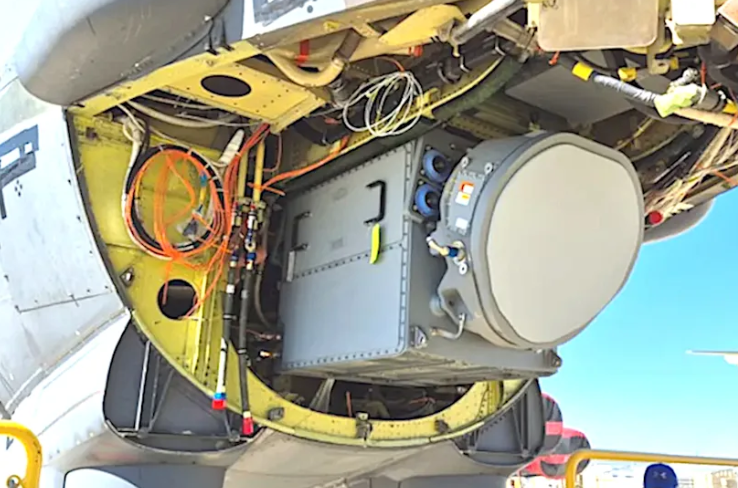
The B-52 Involved In Tragic Crash Was Heading out on Radar Test Sortie
The mission objective was to test a new Active Electronically Scanned Array (AESA) radar system (the Raytheon APQ-188), which is a core component of the upcoming B-52J upgrade package.
B-52 Crash at Edwards AFB — Engineering Fault Tree and Early Considerations
A terrible tragedy occurred at Edwards Air Force Base on June 15, 2026, when a B-52 Stratofortress (tail number 60-0061) crashed shortly after takeoff during a routine test mission. All eight people aboard were killed. The crew reportedly included military personnel, government civilians, contractors, and Boeing employees.
My condolences go to the families, coworkers, and the Edwards flight-test community. Edwards is one of the central locations in U.S. flight-test history, and a fatal mishap there affects a very close technical community.
The cause is officially unknown at this point. The discussion below is therefore not a finding, not an accusation, and not a conclusion. It is an engineering fault-tree framework for thinking about a “shortly after takeoff” loss of aircraft scenario involving an older, highly modified test aircraft.
The most responsible early statement is this:
The aircraft appears to have suffered a loss of controllability, performance, or altitude margin shortly after takeoff. The initiating cause remains unknown.
Known Public Information
Public reporting indicates that the aircraft was supporting a radar modernization test program. Flight-tracking data also suggests that the B-52 was airborne only a few minutes, made a sharp turn after takeoff, and descended at an unusually high rate before impact.
Those data points are important, but they are not sufficient to determine cause.
A short-duration flight after takeoff is one of the most unforgiving regimes in aviation. The aircraft is low, relatively slow, heavy, close to the ground, and may be transitioning through configuration changes such as gear retraction, flap scheduling, trim changes, engine power adjustments, and test-card setup.
For a B-52, additional complexity comes from the aircraft configuration itself: eight engines, a long flexible wing, legacy propulsion controls, aging airframe structure, specialized test instrumentation, and ongoing modernization programs.
Top-Level Event
Loss of controlled flight / ground impact shortly after takeoff
The most useful early question is not simply:
What failed?
A better engineering question is:
What combination of aircraft state, crew inputs, system behavior, structural condition, propulsion response, test configuration, and external conditions led to insufficient controllability, performance, or altitude margin after takeoff?
Branch 1 — Propulsion and Thrust Asymmetry
A propulsion event is always a major branch in a takeoff or initial-climb mishap.
Possible sub-branches include:
- Single-engine failure
- Multiple-engine failure
- Compressor stall or surge
- Fuel flow anomaly
- Fuel contamination
- Engine fire or hot-section failure
- Uncontained engine failure causing secondary damage
- Thrust asymmetry during a critical low-altitude phase
- Incorrect or delayed power response during an emergency
- Engine pod, nacelle, or pylon-related damage
The B-52 has eight engines, which gives redundancy, but it also creates the possibility of complex asymmetric thrust scenarios. A single engine failure may be manageable, but the timing, aircraft configuration, crew workload, airspeed, altitude, and any secondary damage are crucial.
A rapid yaw, roll, or turn shortly after takeoff could be consistent with thrust asymmetry. But it could also be consistent with flight-control, trim, configuration, structural, or test-equipment issues. The tracking data alone cannot distinguish among these.
Branch 2 — Flight Controls, Trim, and Configuration
Given reports of a sharp turn and high rate of descent, flight-control and configuration issues deserve close attention.
Possible sub-branches include:
- Flight-control malfunction
- Hydraulic system anomaly
- Control surface jam, binding, or mis-rigging
- Incorrect trim state
- Flap asymmetry
- Landing-gear drag or configuration problem
- Yaw damper or stability augmentation issue
- Control cable, linkage, actuator, or booster problem
- Maintenance-induced error
- Unexpected aircraft response due to a modified test configuration
A “controllability” problem does not necessarily mean a primary flight-control component broke. It may arise from an interaction among thrust, trim, center of gravity, drag, configuration, structural flexibility, and crew response under very high workload.
The B-52 is a large flexible aircraft. Its wing, fuselage, pylons, and control surfaces do not behave like rigid textbook bodies. Structural flexibility, fuel distribution, stores, test equipment, and asymmetric thrust can all affect aircraft response.
Branch 3 — Fatigue, Aging Structure, and Crack Growth Considerations
Because the B-52 fleet is very old, fatigue must remain in the engineering fault tree. The B-52H aircraft are decades beyond their original service-era assumptions, although they have been sustained through inspection, depot maintenance, structural repairs, upgrades, and life-extension programs.
Fatigue should not be presented as the default cause of this mishap. A crash shortly after takeoff could be initiated by many other mechanisms, including propulsion asymmetry, flight-control malfunction, incorrect trim, configuration error, hydraulic failure, test-equipment interaction, or crew response to an abnormal condition.
Nevertheless, fatigue is a legitimate concern for any aging aircraft, especially one with a long flexible wing, multiple engine nacelles, pylons, control surfaces, and many structural details that have experienced decades of cyclic loading.
Important fatigue-related branches include:
- Wing-root cracking
- Wing-skin or spar cracking
- Upper wing surface fatigue
- Engine pylon or nacelle attachment fatigue
- Control-surface hinge, bracket, or actuator-attachment cracking
- Fuselage frame or longeron cracking
- Landing gear support-structure fatigue
- Cracking around repairs, doublers, fastener holes, or cutouts
- Corrosion-assisted fatigue
- Fretting fatigue at bolted or riveted joints
- Fatigue in modified areas associated with test instrumentation or modernization hardware
- High-cycle fatigue in rotating engine components
- Fatigue crack growth followed by final overload
The distinction between fatigue initiation, fatigue crack growth, and final overload is important. A component may contain a crack that has grown slowly over many flight cycles, but the final failure may occur suddenly when the remaining ligament can no longer carry the applied load.
A fatigue failure could appear in several ways:
- Primary structural failure before impact
A critical structural member fails in flight, causing loss of controllability, loss of load path, or breakup. - Local failure that creates a controllability problem
A pylon, control-surface attachment, hinge fitting, actuator support, or bracket fails, producing asymmetric drag, altered control authority, or secondary damage. - Latent fatigue damage worsened by another event
An engine event, aerodynamic load, control input, vibration transient, or abnormal configuration excites a weakened structure and causes final fracture. - Post-impact fracture only
Components fracture during ground impact, with no pre-existing fatigue involvement. This possibility must also be considered.
Fatigue is therefore not merely an “age” issue. It is a stress-cycle issue. Investigators would need to evaluate mission history, inspection records, crack-detection intervals, repair history, structural modifications, load exceedances, corrosion findings, and any prior anomalies on the accident aircraft.
For a flight-test aircraft, the question also becomes whether any modernization hardware, instrumentation, ballast, antennas, wiring, cooling equipment, racks, or temporary test equipment changed local loads, mass distribution, vibration response, or structural boundary conditions. Even small configuration changes can alter dynamic response or local stress in ways that deserve review.
In a mishap investigation, recovered fracture surfaces would be examined for evidence such as beach marks, ratchet marks, crack-origin sites, corrosion pits, fretting scars, progressive crack-growth regions, and final overload regions. These features can help distinguish a pre-existing fatigue crack from an impact-related overload fracture.
Thus, fatigue should remain in the fault tree as a serious engineering consideration. But it should be treated as evidence-driven. The physical wreckage, fracture surfaces, maintenance records, flight data, and test instrumentation will determine whether fatigue was an initiating cause, a contributing factor, or unrelated to the mishap.
Branch 4 — Mission-Specific Test Configuration
The reported radar modernization context is important, not because it proves anything, but because test aircraft often carry non-standard equipment, instrumentation, wiring, racks, antennas, ballast, cooling systems, power interfaces, and software loads.
Possible sub-branches include:
- Test hardware affecting weight and balance
- Test equipment affecting electrical loads
- EMI or wiring interaction with aircraft systems
- Instrumentation rack or ballast shift
- Antenna, fairing, or radome aerodynamic effects
- Software, avionics, or data-bus interaction
- Crew distraction or abnormal workload from test procedures
- Test-card setup during a critical flight phase
- Temporary wiring or instrumentation affecting maintainability or access
- Cooling system or electrical-power modification interaction
- Local structural loads from installed modernization hardware
A test mission may still be called “routine,” but routine test work can involve a configuration different from the operational fleet baseline. Investigators will therefore compare the accident aircraft configuration against drawings, modification records, test cards, weight-and-balance sheets, wiring diagrams, instrumentation plans, and prior flight results.
A key question will be whether the aircraft behaved consistently with previous flights in the same configuration.
Branch 5 — Crew Response and Human Factors
Human factors should remain in the fault tree, but they should not be used as a premature explanation. Crew actions occur in the context of aircraft behavior, available time, cockpit cues, training, workload, and system feedback.
Possible sub-branches include:
- Emergency recognition and diagnosis
- Crew resource management under high workload
- Incorrect or delayed response to asymmetric thrust
- Spatial disorientation
- Misinterpretation of flight instruments
- Communication breakdown
- Takeoff abort decision timing
- Test-procedure workload during a critical phase
- Ambiguous or misleading cockpit indications
- Multiple simultaneous faults
In a low-altitude initial-climb emergency, the crew may have only seconds to recognize the problem, determine whether the aircraft is controllable, and choose a response.
A crew-response branch does not imply blame. It is part of understanding the time history of the event.
Branch 6 — Environmental and External Factors
Environmental factors should also be retained, even if they are not the leading candidates.
Possible sub-branches include:
- Wind shear
- Microburst
- Strong gust or crosswind
- Wake turbulence
- Bird strike
- Foreign object debris
- Runway or airfield hazard
- Density altitude and heat effects
- Thermal activity over desert terrain
Edwards AFB is in the Mojave Desert, which is not the same bird-strike environment as a coastal, wetland, or agricultural airfield. But bird strike and FOD are standard investigative branches. Evidence would include bird remains, engine compressor damage, impact marks, runway debris, ground video, or biological residue.
Environmental factors should be evaluated from recorded weather, tower observations, pilot reports, ground video, and aircraft response.
TF33 Engines and Lack of FADEC
The accident aircraft was a B-52H, meaning it was still powered by Pratt & Whitney TF33 engines rather than the future Rolls-Royce F130 engines planned for the B-52J upgrade.
FADEC stands for Full Authority Digital Engine Control. A FADEC is a dedicated digital engine-control computer system that manages fuel flow and other engine-control functions. Modern FADEC systems can also provide fault detection, engine health monitoring, transient control, exceedance recording, and diagnostic data.
The TF33 is a legacy engine. It does not provide the same type of modern FADEC-based digital engine control, automated engine protection, and fault logging that investigators would expect from a newer propulsion system.
This does not imply that the TF33 caused the crash. It simply means that propulsion reconstruction may depend more heavily on:
- Flight data recorder channels, if available
- Test instrumentation
- Engine teardown evidence
- Fuel system evidence
- Maintenance records
- Crew communications
- Throttle quadrant positions
- Engine control positions
- Compressor and turbine damage patterns
- Witness marks on mechanical components
- Fire and thermal damage patterns
The lack of FADEC matters because a modern digital engine controller can preserve time-correlated fault data. In a legacy hydromechanical engine-control system, there may be no onboard digital record of compressor stall, fuel-control anomaly, transient overspeed, overtemperature, or other propulsion events unless those parameters were separately recorded by aircraft instrumentation or test equipment.
A hydromechanical fuel-control system can be very reliable, but it does not give investigators the same digital evidence trail as a modern FADEC-equipped engine.
There are also operational implications. A modern FADEC can provide more precise fuel scheduling, transient control, and automated protection against certain engine exceedances. The TF33-era control philosophy places more burden on mechanical scheduling, engine design margins, cockpit indications, and crew response.
Again, this is not a causal statement. It is an investigation-data statement.
The future F130 re-engine program matters for many reasons: sustainment, fuel efficiency, reliability, electrical power, maintainability, and digital health monitoring. But the Edwards crash investigation must focus on the actual aircraft configuration flown on June 15, 2026.
Engineering Probability Snapshot
| Scenario | Early Assessment |
|---|---|
| Flight-control, trim, or configuration issue | High-priority branch because of reported sharp turn and rapid descent |
| Propulsion failure or asymmetric thrust | High-priority branch for any takeoff/initial-climb mishap |
| Mission-system or test-configuration interaction | Important branch because the aircraft was reportedly supporting radar modernization testing |
| Primary wing fatigue failure | Possible, but evidence-dependent; not the first assumption without fracture evidence |
| Engine pylon or local attachment fatigue | Worth careful inspection, especially around non-standard loads or modifications |
| TF33 rotating-component fatigue or engine internal failure | Worth evaluation through teardown and metallurgical inspection |
| Fatigue as a latent contributor | Plausible enough to remain in the fault tree |
| Bird strike or FOD | Standard branch; evidence-driven |
| Weather, wind shear, or desert thermal effects | Standard branch; depends on recorded weather and aircraft response |
| Crew error alone | Should not be assumed; must be evaluated in context of aircraft behavior and available time |
What Investigators Will Look For
The investigation will likely focus on:
- Recorded aircraft data
- Test telemetry and instrumentation data
- Any cockpit voice or mission audio available
- Ground video and range camera footage
- ATC recordings
- Radar and flight-tracking data
- Weather observations
- Aircraft maintenance history
- Weight and balance documentation
- Test-card procedures
- Radar modernization hardware and software configuration
- Flight-control rigging and actuator positions
- Hydraulic system evidence
- Engine teardown findings
- Fuel system evidence
- Structural fracture surfaces
- Fatigue crack evidence
- Corrosion or fretting evidence
- Bird-strike or FOD evidence
- Wreckage distribution
- Impact attitude
- Pre-impact versus post-impact breakup evidence
The wreckage itself will be especially important. Fracture surfaces can often distinguish between fatigue, overload, fire damage, impact breakup, and pre-impact structural separation.
Closing Comments
At this early stage, the most responsible engineering statement is that the crash appears to involve a loss of controllability, performance, or altitude margin shortly after takeoff. The initiating cause remains unknown.
The major branches are propulsion, flight controls, configuration, fatigue and structural integrity, test-system integration, human factors, and environment. The reported sharp turn and high descent rate make controllability-related branches especially important, but they do not by themselves identify the failed system.
Fatigue deserves to remain in the analysis because the B-52 is an aging, highly sustained aircraft with many structural details, repairs, modifications, and load paths. But fatigue should be treated as evidence-driven, not assumed.
The lack of FADEC on the TF33 engines is also relevant, not because it proves an engine cause, but because it affects both engine transient behavior and the amount of digital propulsion data available to investigators.
The final answer will come from physical evidence, recorded data, test instrumentation, maintenance records, teardown inspections, metallurgical analysis, and disciplined mishap-board work.
— Tom Irvine