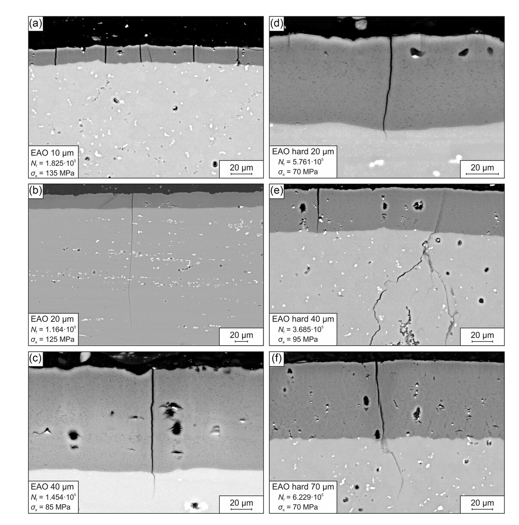
Image reference: https://onlinelibrary.wiley.com/doi/full/10.1002/adem.202300394
What Is Anodizing?
Anodizing is widely used to improve corrosion resistance and surface durability in aluminum and other light metals. However, under cyclic loading, anodized coatings can play a surprising, and sometimes detrimental, role in fatigue performance.
This post walks through why anodized coatings crack, how those cracks propagate, and what engineers should watch for in fatigue-critical designs.
Anodizing is an electrochemical surface treatment that produces a controlled oxide layer on a metal surface. In aluminum alloys, this oxide layer is typically aluminum oxide (Al₂O₃).
Key characteristics:
- The process uses chromic or sulfuric acid electrolytes
- Produces an anodic oxide coating
- Commonly applied to aluminum, titanium, and select other metals
- Often specified for corrosion resistance and wear protection
A common industrial variant is EAO — Electrolytic Anodic Oxidation.
The Mechanical Reality of Anodic Oxide Coatings
While anodizing improves environmental durability, it fundamentally alters the surface mechanics:
- The oxide layer is brittle
- The coating is porous
- The process introduces residual tensile stress in the coating
- Elastic mismatch exists between the stiff oxide and ductile substrate
From a fatigue perspective, this combination is problematic.
Fatigue Crack Initiation: It Starts at the Surface
Under cyclic loading, anodized coatings tend to crack before the underlying metal.
Why?
- Brittle oxides have low strain tolerance
- Residual tensile stresses accelerate microcrack formation
- Surface porosity acts as a stress concentrator
In the micrographs shown above, cracks clearly initiate within the anodic layer and then grow downward.
Crack Propagation into the Base Metal
Once a crack forms in the coating:
- It penetrates through the oxide thickness
- It reaches the oxide–metal interface
- It propagates into the ductile aluminum substrate
At that point, the fatigue life becomes dominated by substrate crack growth, but the damage was already triggered by the coating.
This mechanism explains why anodized components can show reduced fatigue strength compared to bare or polished aluminum—even though corrosion resistance improves.
Example Material: Aluminum 6082
The above images show aluminum alloy 6082, a medium-strength Al-Mg-Si alloy commonly used in:
- Structural components
- Aerospace ground hardware
- Marine and transportation applications
For such alloys, the fatigue penalty of anodizing must be explicitly considered in design allowables.
Safari Kit Helicopter Case History
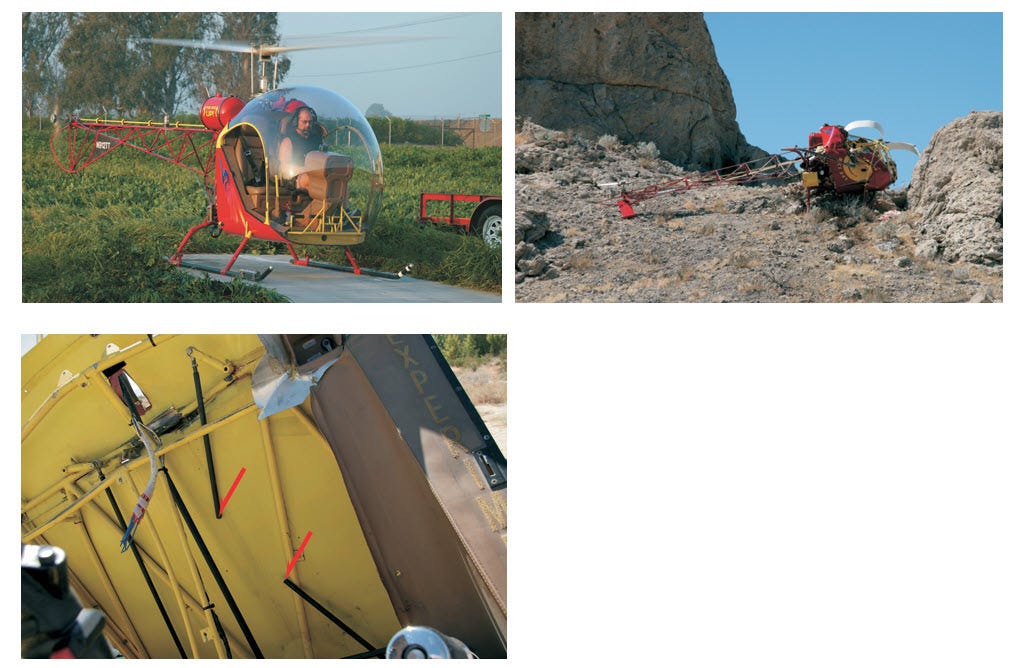
This real-world accident illustrates how anodized coatings can directly contribute to fatigue failure when applied without full consideration of cyclic stress effects.
Aircraft Background
- Aircraft: Safari kit helicopter
- Structure involved: Aluminum control tube
- Surface treatment: Anodized aluminum
- Service life at failure: Only a few hundred flight hours
The helicopter was a homebuilt kit aircraft, and certain finishing steps, including anodizing, were customized by the owner rather than performed under a certified production process. During operation, an anodized aluminum control tube fractured due to fatigue, leading to loss of control and a subsequent crash.
Key observations:
- The anodized coating was a customized step performed by the owner
- The control tube experienced cyclic loading during normal flight
- Failure occurred far earlier than expected for a properly designed aluminum control component
- The fracture initiated at the surface and propagated through the tube wall
Red arrows in the inspection image (left panel) highlight the crack initiation and fracture location.
Fortunately, the pilot survived, suffering only a sprained ankle. The incident highlights how small surface-treatment decisions can have system-level consequences in fatigue-critical components
Reference: https://www.kitplanes.com/error-chain-15/
____________________________________________________________________
Fatigue Behavior of DLC Coatings Compared with Anodizing
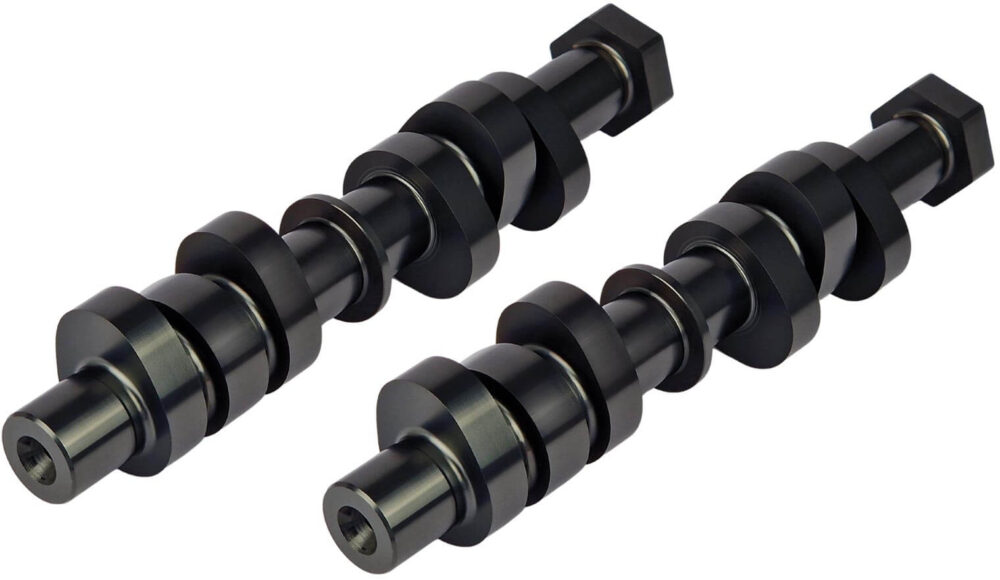
Diamond-like Carbon Coating
Surface coatings are often applied to improve wear resistance, corrosion protection, and tribological performance. However, from a fatigue perspective, coatings can either enhance or degrade fatigue life depending on their stiffness, thickness, residual stress state, adhesion quality, and interaction with the substrate. Two commonly considered surface treatments—diamond-like carbon (DLC) coatings and anodizing—exhibit fundamentally different fatigue mechanisms, particularly on aluminum alloys.
DLC Coatings and Fatigue Performance
Diamond-like carbon (DLC) coatings are thin (typically 1–5 μm), amorphous carbon-based films deposited via PVD or PECVD processes. They are characterized by high hardness, low friction, and excellent wear resistance.
From a fatigue standpoint, DLC coatings are generally fatigue-neutral to fatigue-beneficial when properly applied, due to several key attributes:
- Thin coating thickness minimizes stress amplification at the coating–substrate interface.
- Compressive residual stress is often present in well-controlled DLC films, which can retard crack initiation.
- Good adhesion (often via metallic or graded interlayers such as Cr or Ti) limits interfacial debonding under cyclic loading.
- Crack arrest behavior: microcracks that form in the DLC layer tend to blunt or arrest at the interface rather than penetrating deeply into the substrate.
However, DLC coatings are not universally benign. Potential fatigue concerns include:
- High elastic modulus mismatch between DLC and aluminum substrates, which can localize strain at surface asperities.
- Brittle cracking of the DLC layer under high tensile strain amplitudes, especially in bending-dominated fatigue.
- Edge effects and defects (pinholes, nodules) that can act as local stress raisers if process control is poor.
In practice, fatigue degradation from DLC is usually modest (often <10–15%) and, in some cases, fatigue life improvements are reported, particularly in high-cycle fatigue regimes dominated by surface crack initiation.
Anodizing and Fatigue Performance
Anodizing is an electrochemical oxidation process that converts the aluminum surface into a thick, porous aluminum oxide layer, typically 10–50 μm thick (and sometimes thicker for hard anodizing).
Unlike DLC, anodizing is consistently associated with fatigue strength reduction, particularly in high-cycle fatigue. The dominant mechanisms include:
- Brittle, ceramic-like oxide layer that cracks readily under cyclic tensile strain.
- Surface microcracks and pores inherent to the anodic structure, which serve as ready-made crack initiation sites.
- Tensile residual stresses introduced during oxide growth and post-sealing processes.
- Poor crack blunting capability, allowing cracks formed in the oxide to propagate directly into the substrate.
Fatigue strength reductions of 20–50% are commonly reported for anodized aluminum alloys unless mitigated by additional treatments such as shot peening or polishing prior to anodizing.
Hard anodizing, while beneficial for wear resistance, is often the most damaging to fatigue performance due to increased oxide thickness and brittleness.
Direct Comparison: DLC vs. Anodizing
| Attribute | DLC Coating | Anodizing |
|---|---|---|
| Typical thickness | 1–5 μm | 10–50+ μm |
| Mechanical behavior | Hard but thin; elastic–brittle | Thick, brittle ceramic |
| Residual stress | Often compressive | Often tensile |
| Surface defects | Low if well deposited | Inherent pores and microcracks |
| Crack initiation tendency | Low to moderate | High |
| Fatigue life impact | Neutral to mildly beneficial | Often strongly detrimental |
| Suitability for fatigue-critical parts | Generally acceptable | Requires mitigation |
Looking for a deep dive on this topic? Explore our comprehensive guide and resource collection on the Residual Stress & Structural Integrity Hub.