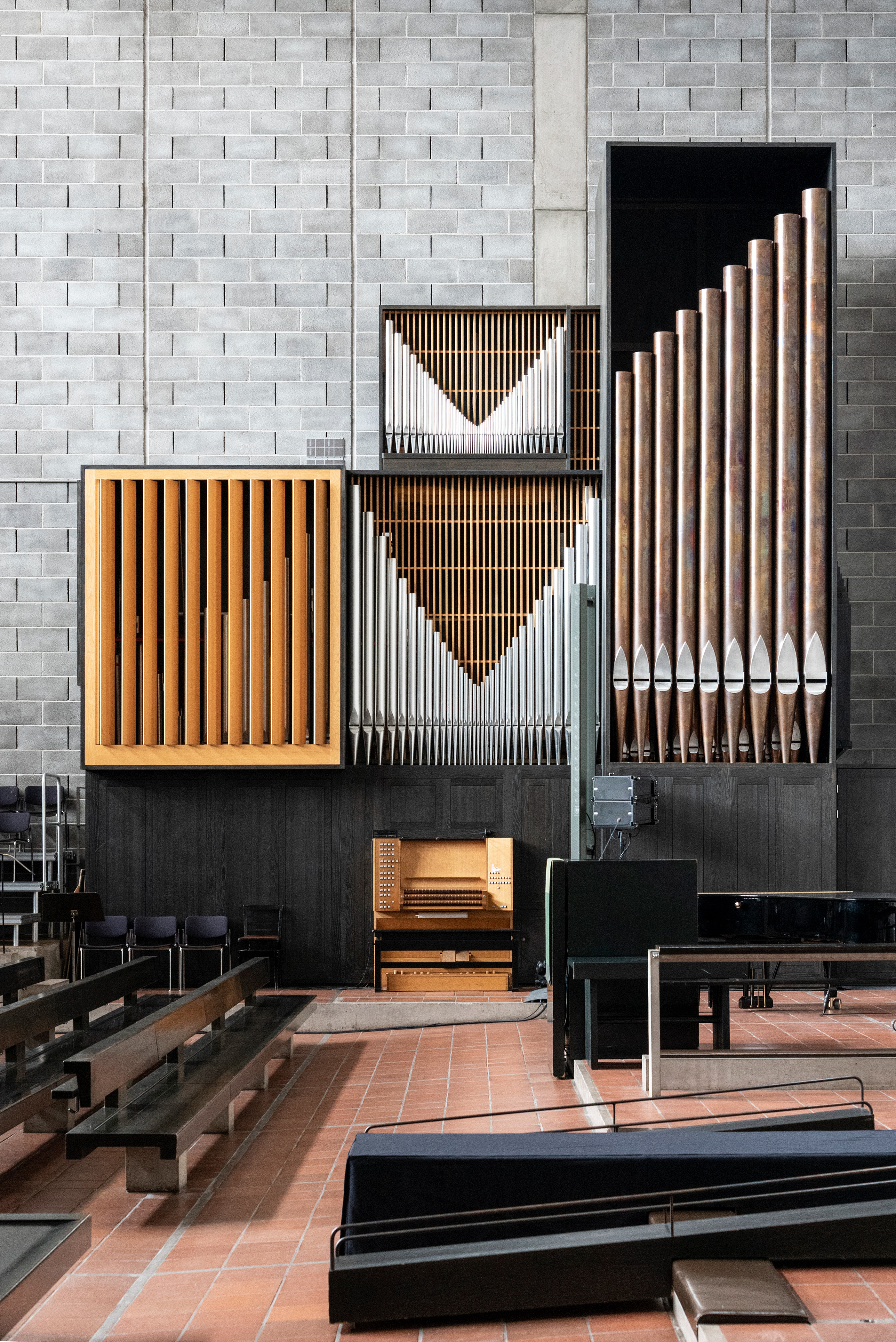
Tapiola Lutheran Church in Espoo, Finland, Opened in 1965
Helmholtz-type resonators are built into the walls of the church. The slots between brick pairs and cavities behind them act as both absorbers and diffusors of sound. The absorption reduces the reverberation time as desired for speech intelligibility during sermons. Some reverberation is desirable, however, to enhance organ music.
A Helmholtz resonator is a volume of air which is enclosed in a container with at least one opening. It is also called a cavity resonator. The air in the container’s neck acts as a mass. The air in the volume acts as a spring. The Helmholtz resonator thus behaves as a mechanical spring-mass system.
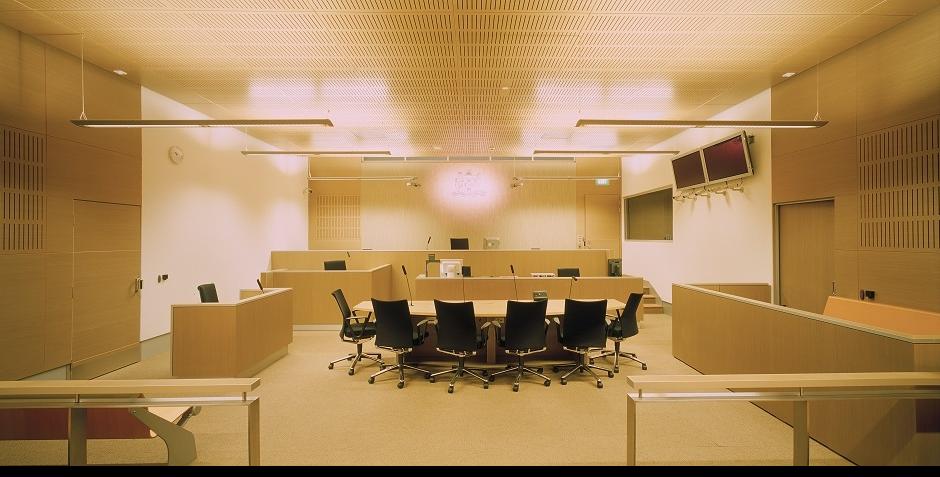 Courtroom in Bankstown, NSW, Australia, with slotted panels for reverberation reduction. https://decorsystems.com.au/
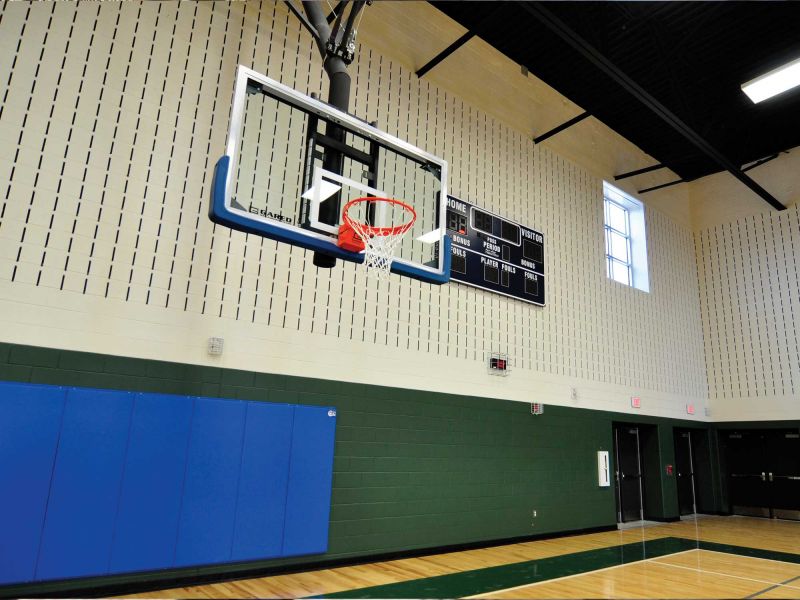
Slotted block absorbers in a gymnasium.
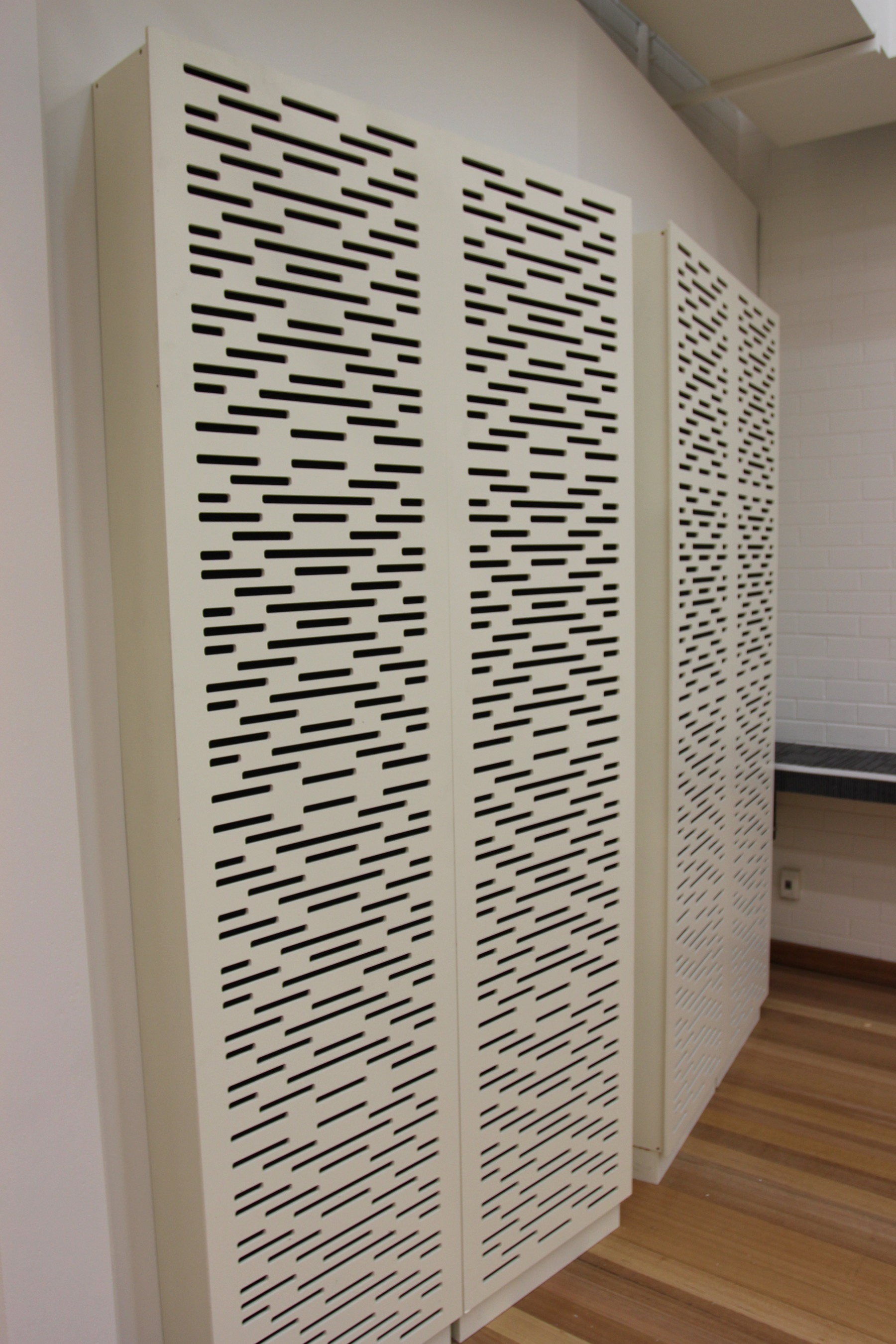
The BT240 slotted modular bass trap panel provides excellent absorption down to 65 Hz. https://soundacoustics.com.au/
– Tom Irvine