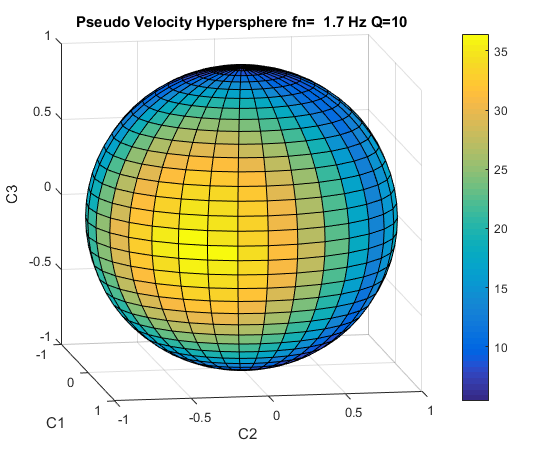
Figure 1. El Centro Earthquake 1940, Peak Pseudo Velocity, 36.4 in/sec
Launch vehicle and spacecraft equipment must withstand pyrotechnic shock from stage separation and other flight events. Civil engineering structures and equipment must survive seismic events. There are many other examples where military, automotive, telecommunication and other equipment must be designed and tested to meet shock requirements derived from field or flight data. The specification is commonly given as a shock response spectrum (SRS). An SRS may be calculated for each orthogonal input axis, assuming the availability of triaxial accelerometer data. Each axis may thus have a separate specification. Alternatively, a maximum envelope can be drawn over the three SRS curves and then applied as a uniform specification to each orthogonal axis.
The uniform enveloping method, however, can underestimate the maximum resultant shock when all possible orthogonal axes sets are considered. The purpose of this paper is to introduce a hypersphere method to achieve a true maximum SRS.
Paper link: hypersphere_SRS
The Matlab script for this calculation is included in the GUI package at:
Vibrationdata Matlab Signal Analysis Package
– Tom Irvine
📌 Looking for a comprehensive guide on shock analysis and testing? Explore our Pyrotechnic Shock Resource Hub for an annotated directory of tutorials, standards, SRS synthesis methods, and aerospace case studies.
📌 Related Earthquake Engineering Knowledge Hub
This article is featured in our main Earthquake Engineering & Structural Dynamics Hub . Visit the hub to explore related articles on shock response spectra, time history analysis, seismic equipment qualification, and structural case studies.
2 thoughts on “Hypersphere SRS”