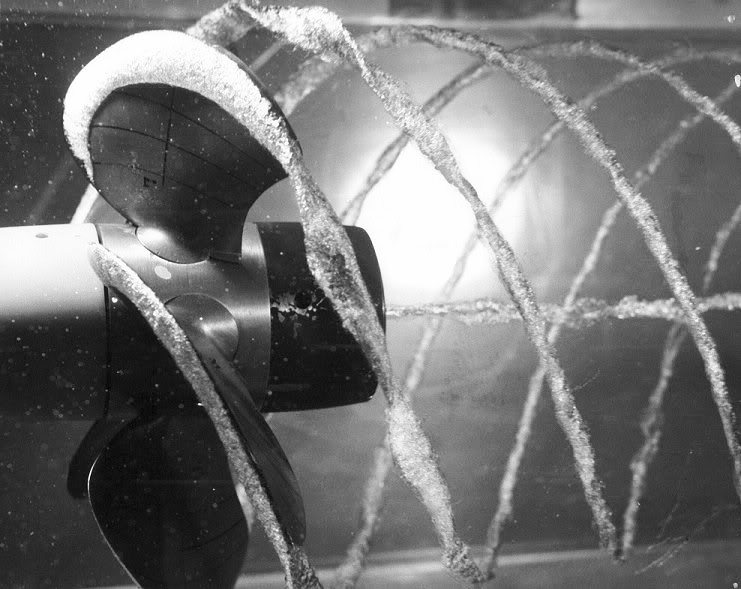
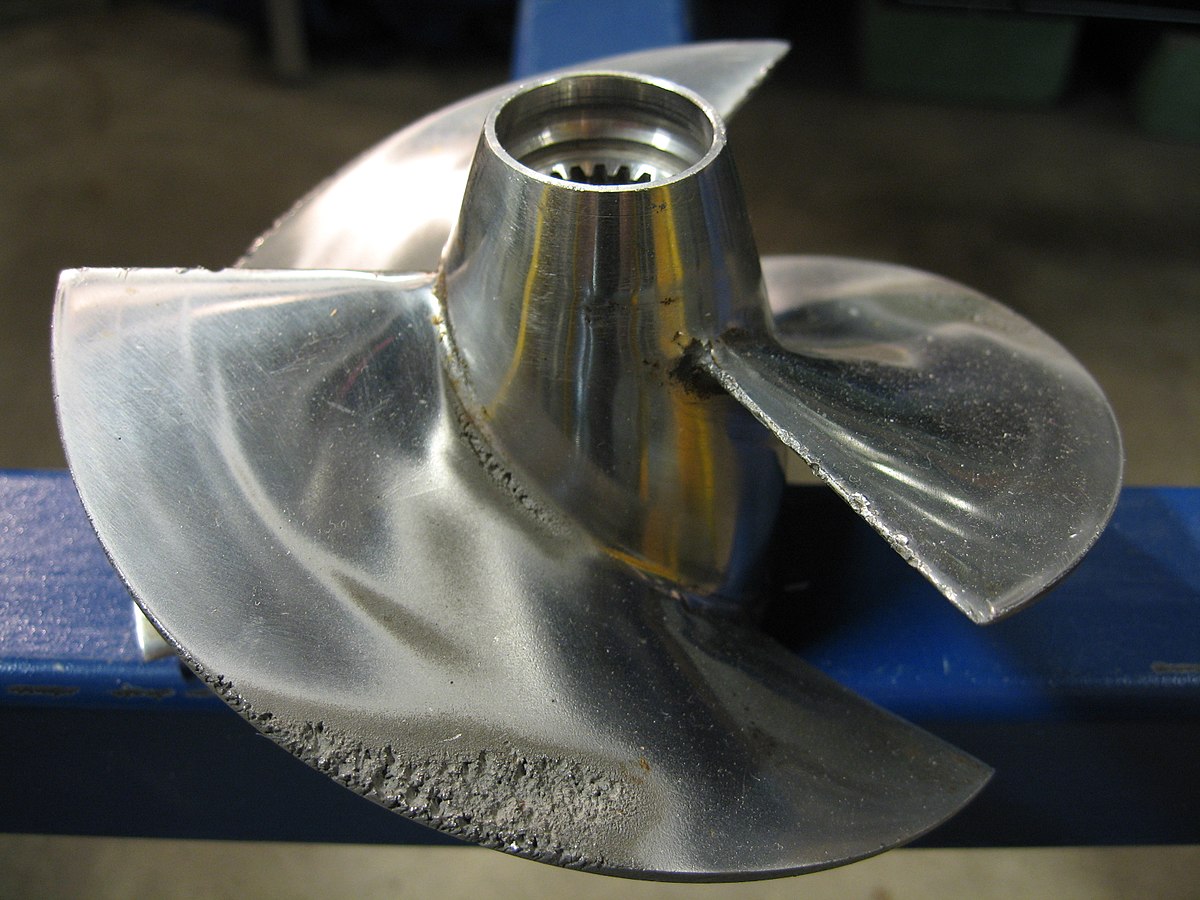
Cavitation is the formation of vapor bubbles within a liquid at low-pressure regions that occur in places where the liquid has been accelerated to high velocities, as in the operation of centrifugal pumps, water turbines, and marine propellers.
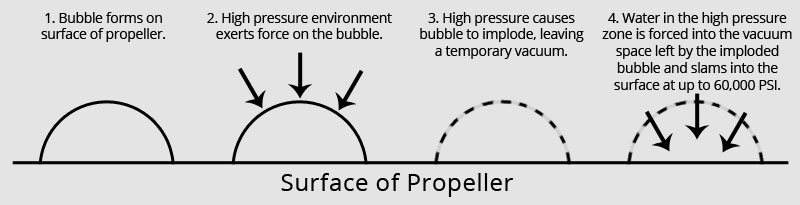
The water jet slows down after traveling some distance. The water pressure thus increases, causing the bubbles to collapse. The vapor in the bubbles returns to a liquid state. The imploding bubbles generate a high intensity sound pulse.
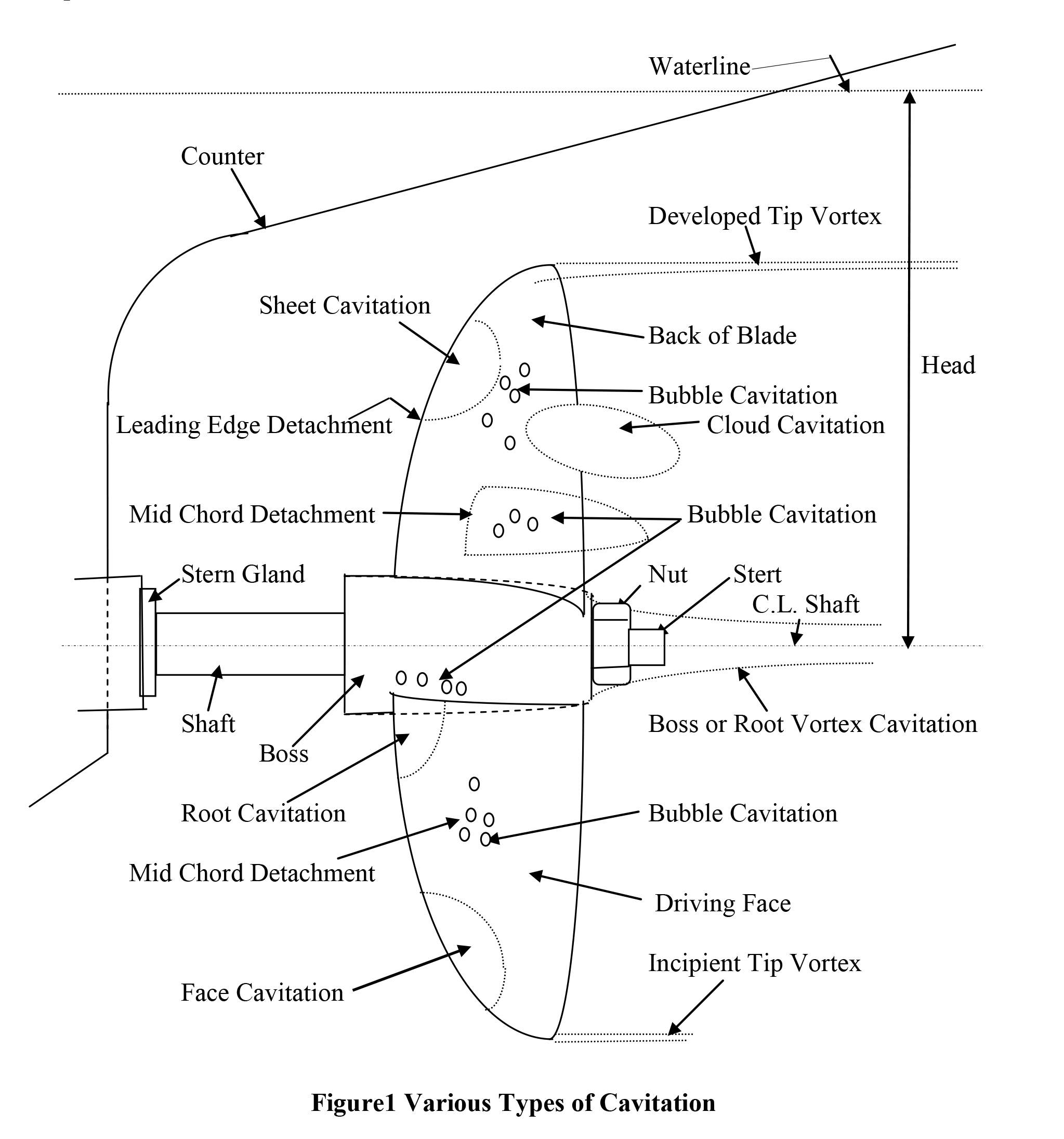
There are numerous possible cavitation mechanisms, and their oscillation energy can be tonal, broadband or a combination thereof. Cavitation produces both structure-borne vibration and radiated noise.
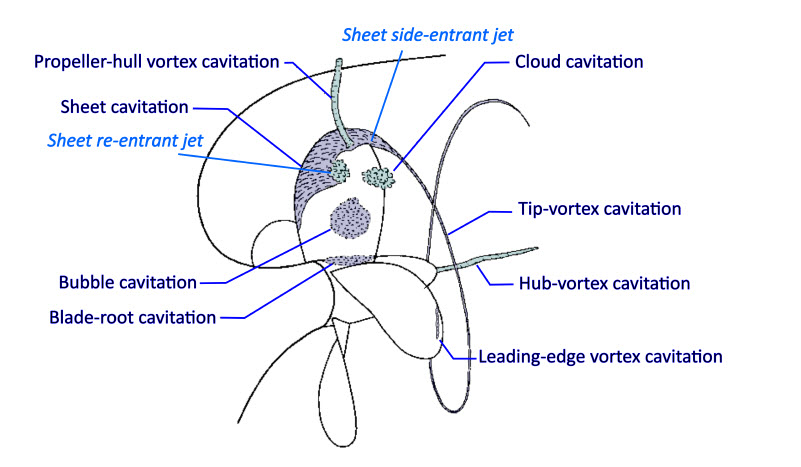
Cavitation Mechanisms (Image courtesy of Johan Bosschers)
– Tom Irvine
Sent from my iPhone
>