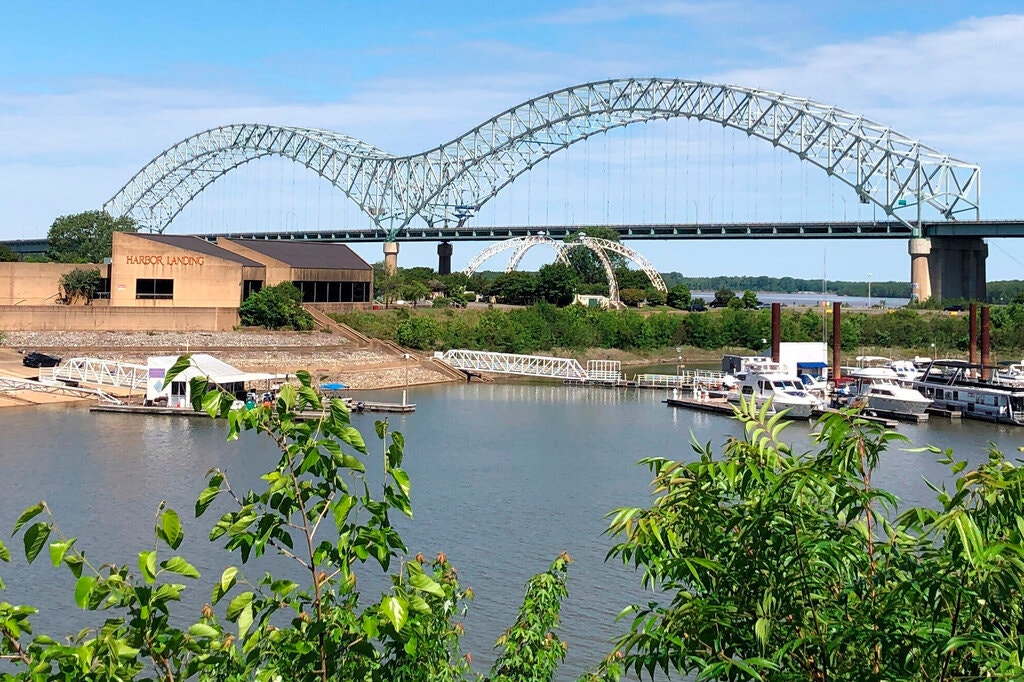
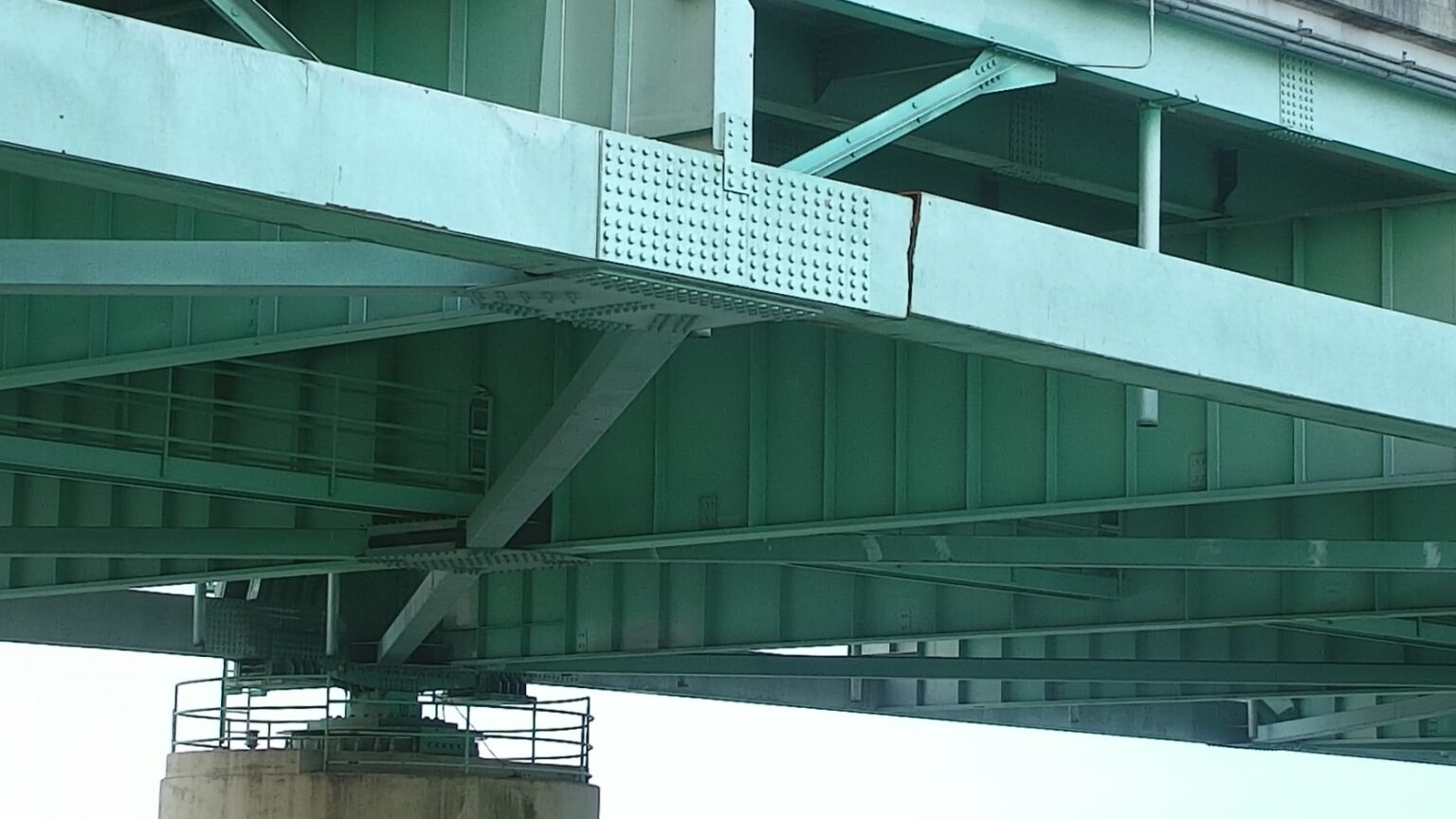
A crack in a steel beam forced the closure of the Interstate 40 Hernando DeSoto bridge that connects Arkansas and Tennessee over the Mississippi River at Memphis. A critical beam was fractured to the point of being nearly severed. Photos of the crack appear to show the two-foot-wide steel box beam broken nearly in two at a location near the bridge’s center pier, on one end of the span on the Tennessee side of the bridge. The bridge has been closed to traffic pending repair which could take months.
In addition, the U.S. Coast Guard has closed off the waterway to all vessel traffic near the bridge span as a precautionary measure. As of Wednesday, there are 16 vessels with a total of 229 barges in the queue on both sides. There is no firm timeline yet on when the vital waterway will reopen.
The cause of the damage was still under investigation, but Arkansas Department of Transportation Director Lorie Tudor and other officials said stress caused by wear and tear on the 50-year-old bridge was likely a factor. Traffic is being rerouted to the Interstate 55 bridge.
The crack was most likely a fatigue crack due to daily thermal contraction and expansion as well as the dynamic loads from the vehicle traffic.
Adel Abdelnaby, associate professor of engineering at University of Memphis said, “You know, usually I explain it to my students, imagine that’s the truss and you have trucks driving on it and keeps on bending like this.”
Abdelnaby studies and teaches bridge fatigue, which happens when tiny cracks in the metal form over time.
“You are subjecting steel to many cycles of stresses, millions of cycles. Every truck that passes by, that’s one cycle. So, imagine how many cycles have been there since the 1970s,” Abdelnaby explained.
The Hernando Desoto bridge opened in 1973. Abdelnaby said that bridges built during that era were not designed to handle such a high volume of traffic. Prior to its closure, 41,000 vehicles crossed this bridge every day. Thirty percent were commercial trucks.
Dr. Andrew Assadollahi, Department Chair of Civil and Environmental Engineering at Christian Brothers University, said: “Based on what I’ve seen of the photos while this member of the bridge is definitely an important member, it doesn’t seem to be one of the main, load carrying girders of the entire bridge. But it’s still a very important member.”
Dr. Assadollahi said the reason why is because the loads on the bridge, like traffic or wind, are transmitted through structural members, then down to the foundation. “Anytime you have a member that has fractured or failed like this member has, the loads acting on the structure have to take a new path,” he said.
“So if other members become over stressed then eventually that could lead to a major, major problem. So the decision to shut down the bridge when they did and to keep it shut down was definitely the right call, definitely.”
———
The bridge is also in the New Madrid Seismic zone. A sequence of earthquakes occurred in this zone in the winter of 1811-1812 that lasted for several months and included three very large earthquakes estimated to be between magnitude 7 and 8. The three largest quakes destroyed several settlements along the Mississippi River, caused minor structural damage as far away as Cincinnati, Ohio, and St. Louis, Missouri, and were felt as far away as Hartford, Connecticut, Charleston, South Carolina, and New Orleans, Louisiana.
Tom Irvine
📌 Related Bridge Dynamics Knowledge Hub
This case study is featured in our main Bridge Dynamics, Vibration & Structural Integrity Hub . Visit the hub to explore related articles on aeroelastic flutter, stress corrosion cracking, field modal testing, and seismic analysis.
📌 Related Earthquake Engineering Knowledge Hub
This article is featured in our main Earthquake Engineering & Structural Dynamics Hub . Visit the hub to explore related articles on shock response spectra, time history analysis, seismic equipment qualification, and structural case studies.
Glad they caught it before it catastrophically ruptured. I’m sure there many other bridges that need repair or replacement. Eric
Sent from my iPhone
>