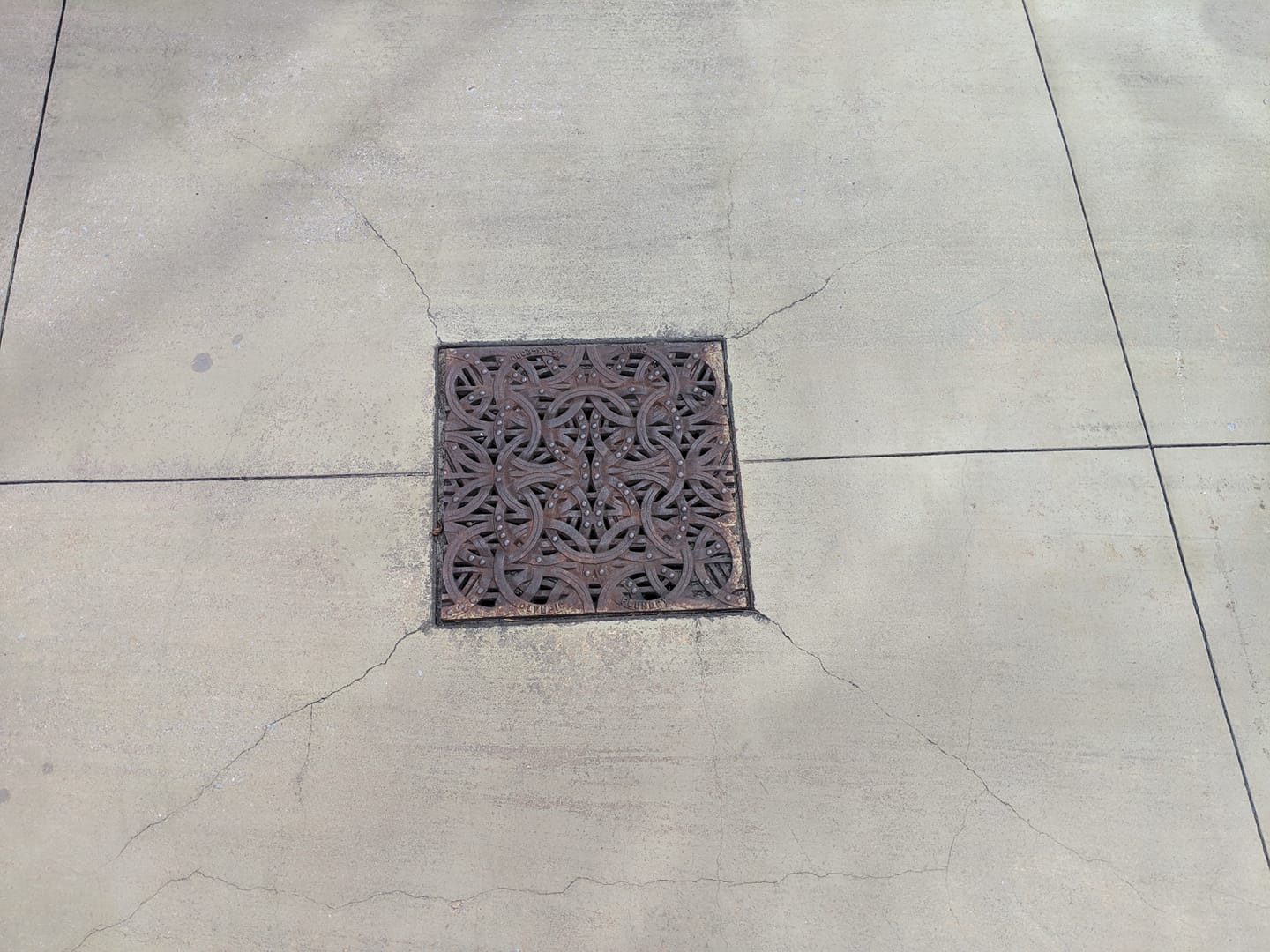
This photo was taken outside of my former office in Huntsville, Alabama.
As newly poured concrete hardens and dries, it shrinks. This is due to the evaporation of excess mixing water. The cracks in the photo may have formed during this phase.
In addition, the concrete experiences stress cycles due to the daily heating & cooling, rain, foot traffic, etc., causing the cracks to grow. Rain seeps into the cracks during wintery days and then freezes overnight causing further stress and crack growth.
Frozen ground settles as it thaws, which leaves concrete susceptible to cracking.
Concrete is strong in compression but weak in tension.
A circular grate drain should probably have been installed instead of the square one to reduce the stress concentration that occurred at the corners.
Tom Irvine
Hi Tom
I really like your posts and this one is an intersting topic. I just wonder, how big does a crack need to be before it is considered to be a crack? Sometimes you have microcracks in the structure, and I assume that before you get a visible crack, you still have unvisible cracks.