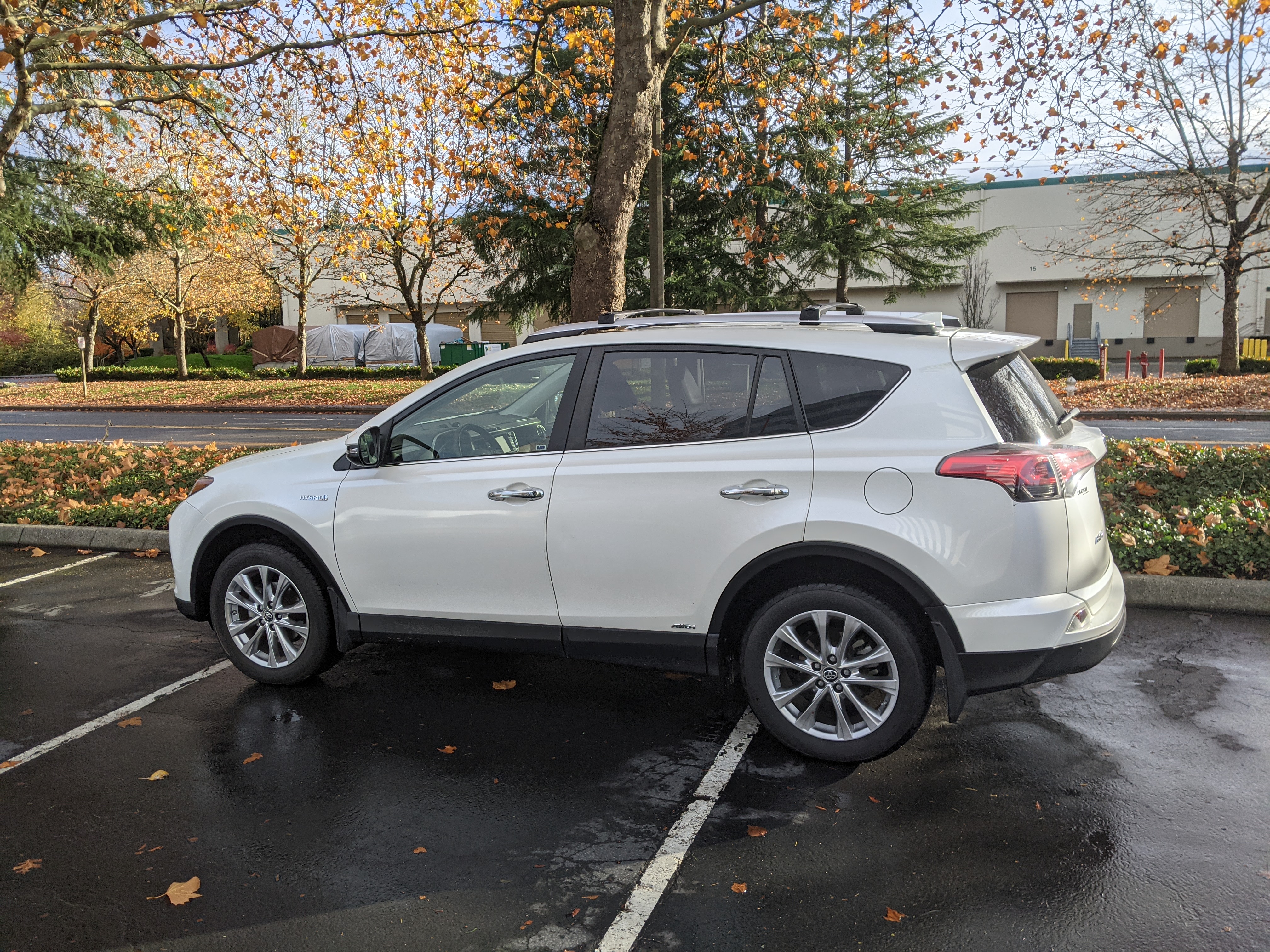
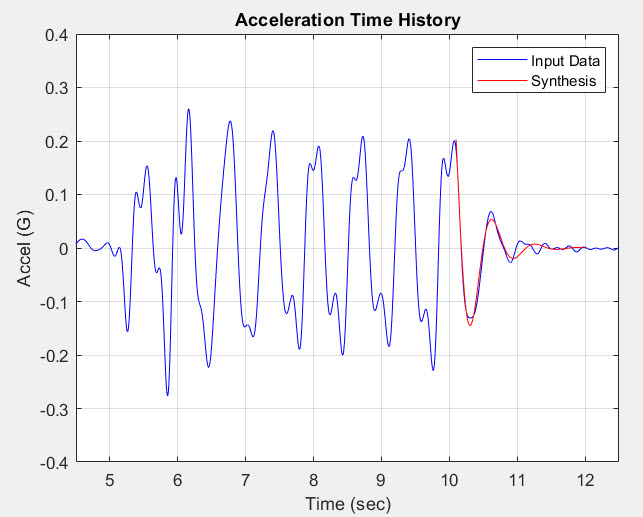
This is my current vehicle. With the car parked, I opened the hatch door and sat down on the cargo compartment floor facing outward with my feet on the ground. I then used my legs to move my gluteus maximus up-and-down a few times while still maintaining contact between my rear and the floor. My goal was to excite the natural frequency of the vehicle by synchronizing my movement with this frequency. I measured the oscillation with my Android Smartphone. The resulting time history is shown below. I did a damped-sine curve-fit at the end of the signal immediately after I jumped up and set the vehicle motion into its free decay. The extracted fundamental frequency is 1.6 Hz with 32% viscous damping, which are both in-family for vehicles of this type.
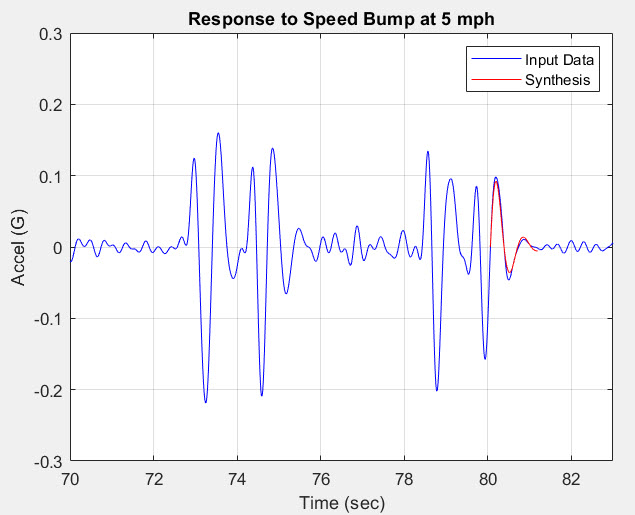
The plot below show the response of the vehicle over two speed bumps. The estimated natural frequency from the curve-fit is 1.5 Hz with 30% damping which agrees reasonably well with the parked test.
– Tom Irvine
Looks like there might be two modes in the response – pitching and bounce?
Steve
Your passion for dynamics is both inspiring and infectious!