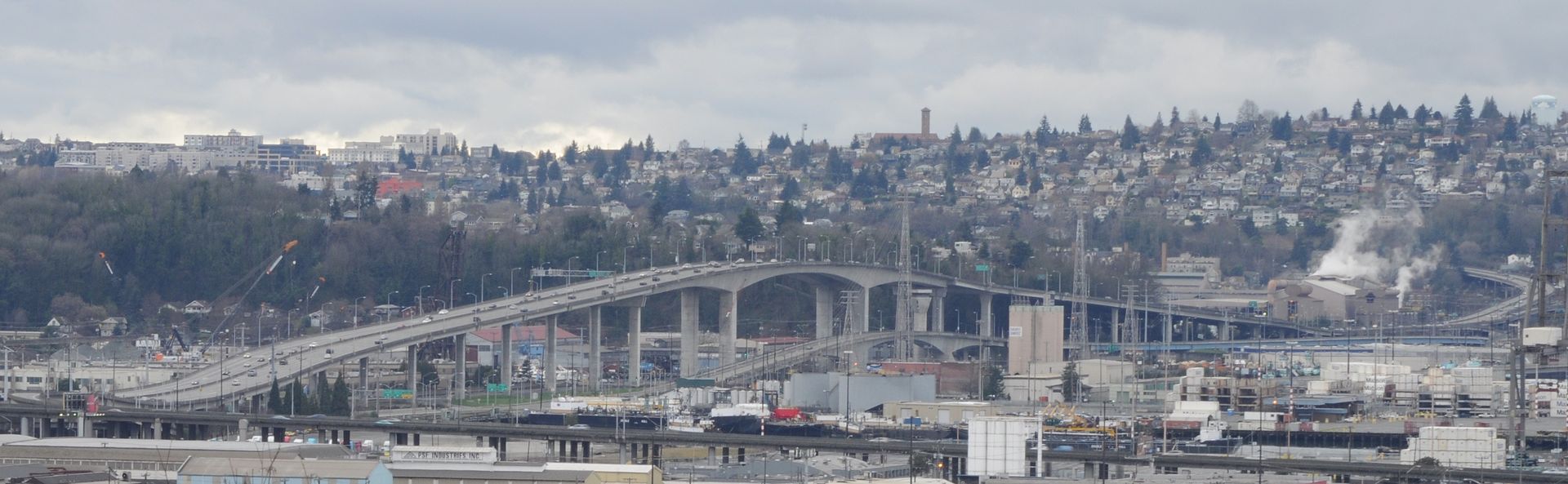
The West Seattle Bridge was built between 1981 and 1984 after the previous bridge was deemed inoperable as a result of being struck by the freighter Antonio Chavez in 1978.
The bridge spans the east and west channels that form the mouth of the Duwamish River at Elliott Bay, crossing over Harbor Island.
100,000 vehicles, including heavy buses and trucks, crossed the bridge daily.
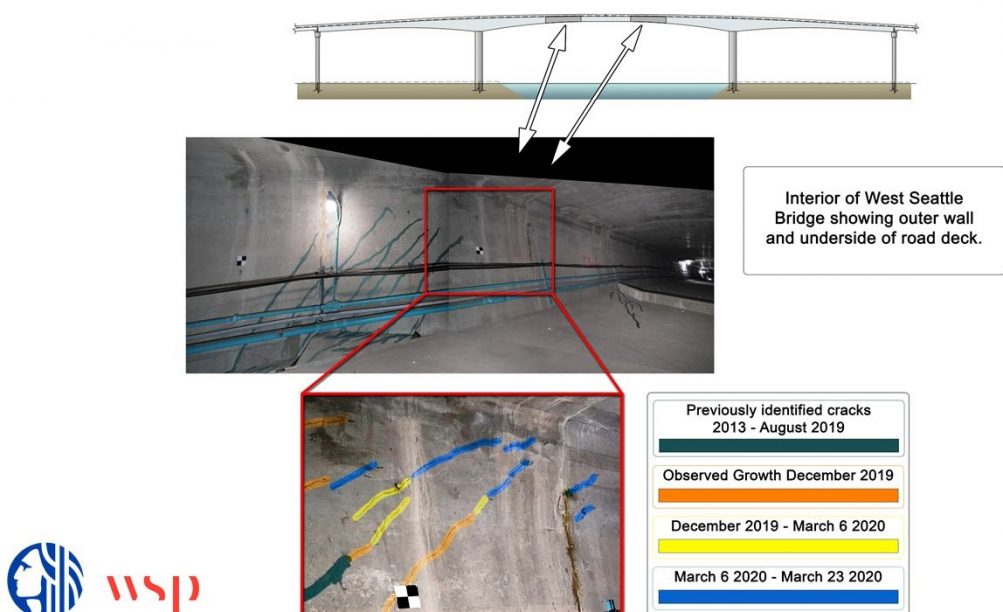
The bridge was closed on March 23, 2020 after cracks in the underside were found to be growing rapidly, necessitating a major repair amid the COVID-19 pandemic. SDOT has since announced that the bridge will remain closed until at least 2022.
The girder wall cracks had grown to 2 feet (0.61 m) within a month, while the hollow girder cracks had been noticed during inspections. An earlier report from 2014 speculated that earlier cracks had been caused by the 2001 Nisqually earthquake.
Another theory is that the 220,000-ton bridge was gradually weakened by long-term shrinking of concrete within the twin girders that support the main span above the Duwamish Waterway. Local experts have pointed to an innate behavior of concrete known as “creep” that causes some bridges worldwide to sag by middle age.
“It is possible that the amount of creep that has occurred is greater than the designers, and broader engineering community, would have anticipated,” said Seattle structures director Matt Donahue.
Creep in concrete is driven by water-volume loss from dehydration, the compression of water molecules trapped in microscopic pores, or delayed chemical reactions.
Volume loss from creep likely caused high-tension steel cables within the girders, which compress and strengthen the bridge, to slacken according to University of Washington Civil and Environmental Engineering professor John Stanton.
A stuck bearing may have been a contributing cause. Lateral bridge bearings distribute pressure and allow the bridge to move in response to traffic loads, normal concrete creep and shrinkage, thermal variations, or even an earthquake. The lateral bearings on Pier 18 were compressed and bulging, locking together two critical parts of the bridge which normally independent of each other.
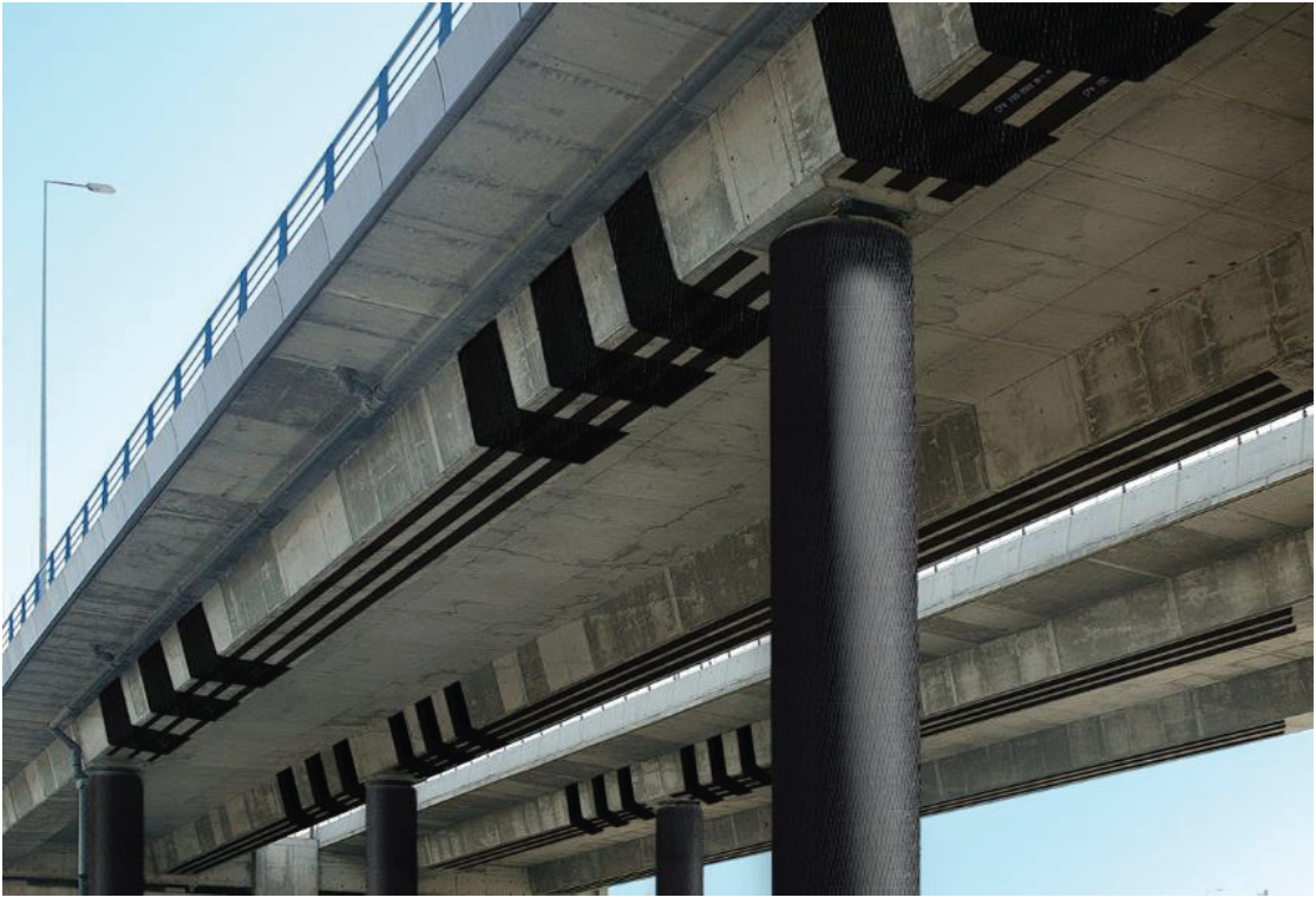
Bridge with Carbon Fiber Wrapping
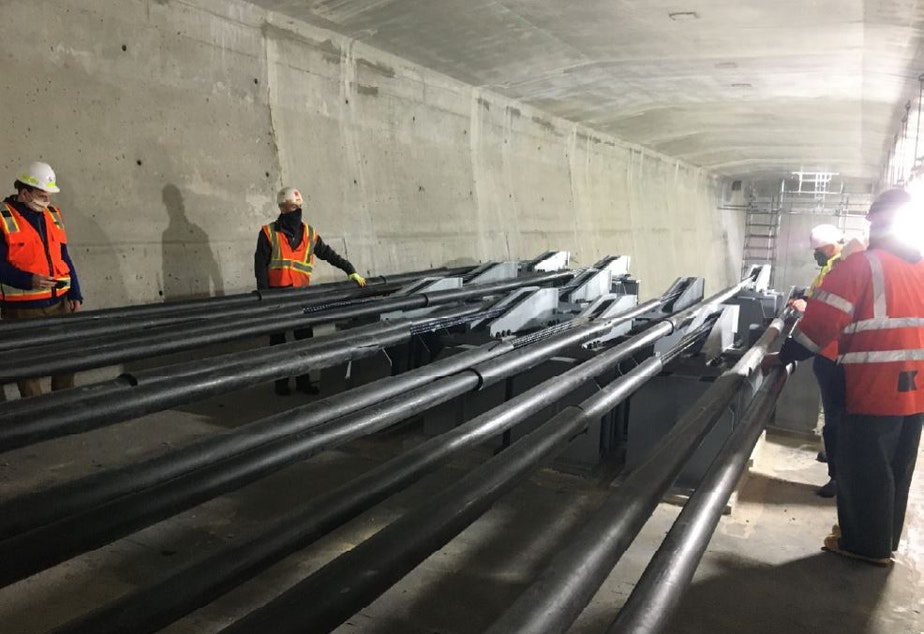
Bridge Post-Tensioning Cables
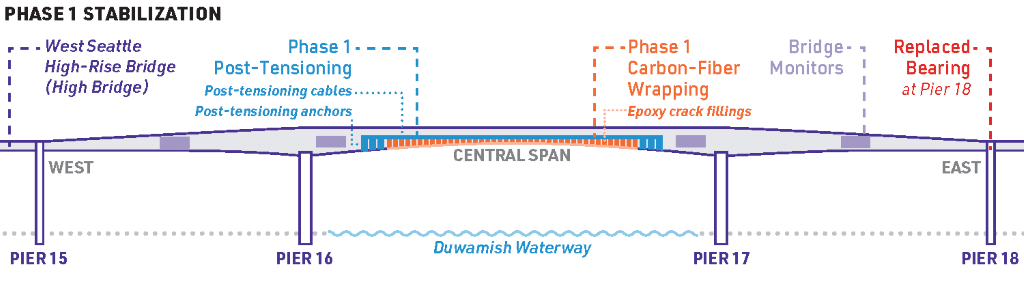
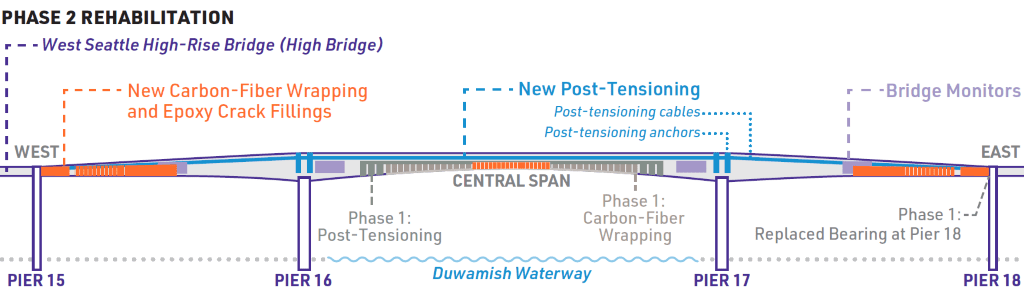
The bridge has been stabilized so that repairs can be made. A platform was built below the bridge that allowed work crews to safety access the exterior of the bridge to add carbon fiber wrapping and epoxy. The platform was removed after stabilization was completed.
Most repairs will be done inside the girders, to strengthen the bridge with high-tension steel cables to prevent cracking. Ten miles of taut steel cable were previously installed inside the bridge during stabilization.
Tom Irvine