I have added an exponential decay option to the wavelet synthesis function. This arranges the wavelets so that they will “resemble” a pyrotechnic-like time history. The function is included in the GUI package at: Matlab Link
Note that the conservative ramp-plateau enveloping in the SRS specification derivation adds a constraint such that the original time history can never be truly replicated for the case of a specification derived from a single accelerometer measurement. The situation is more complicated when the specification covers multiple locations, axes, or tests.
Hint: If your SRS specification begins at 100 Hz, then extrapolate it down to 10 Hz in case your structure has modes < 100 Hz. This is probably a good idea regardless.
Please let me know if you have any comments or questions.
Thank you,
Tom Irvine
>> srs_spec=[10 10; 2000 2000; 10000 2000]
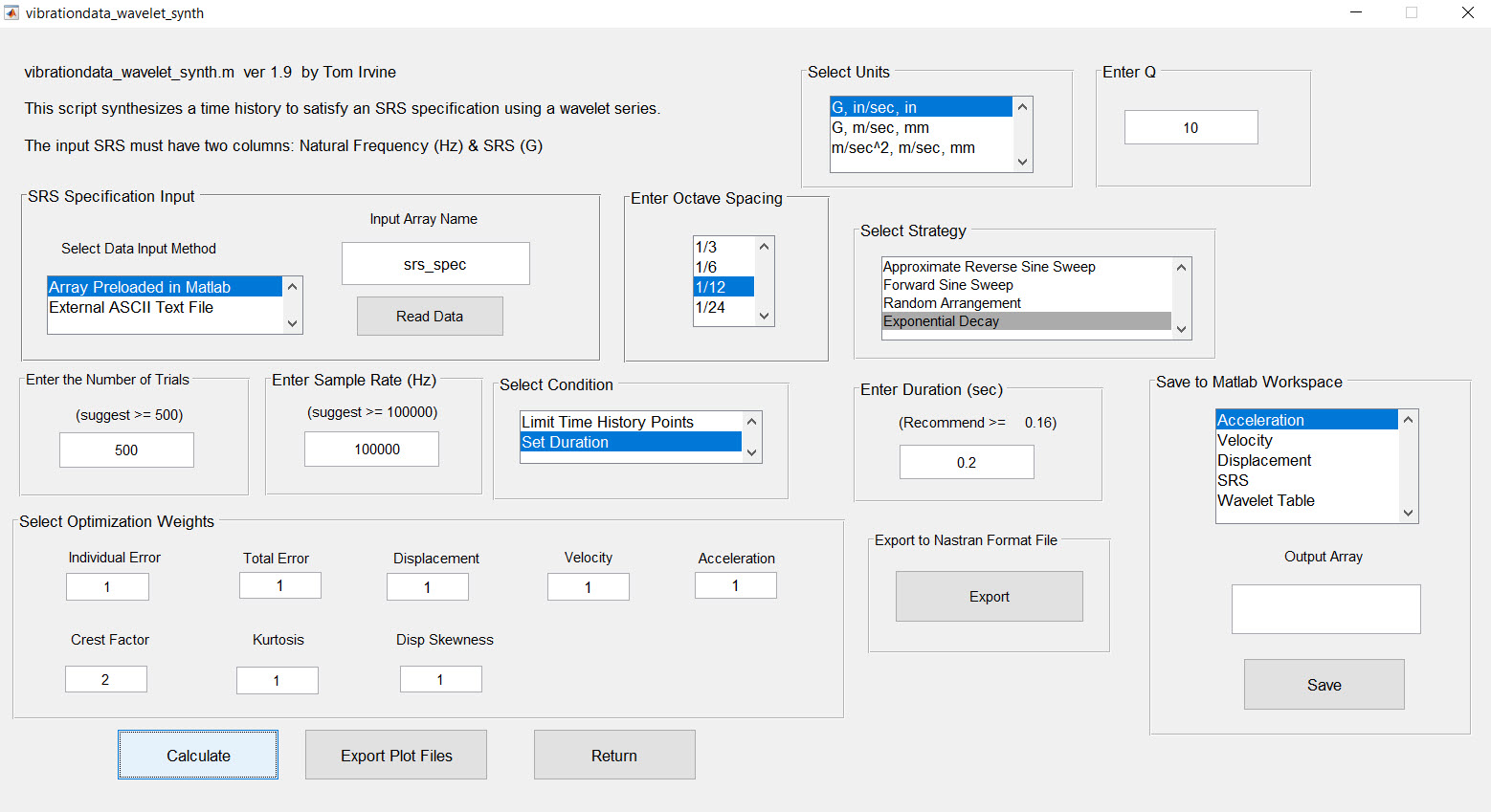
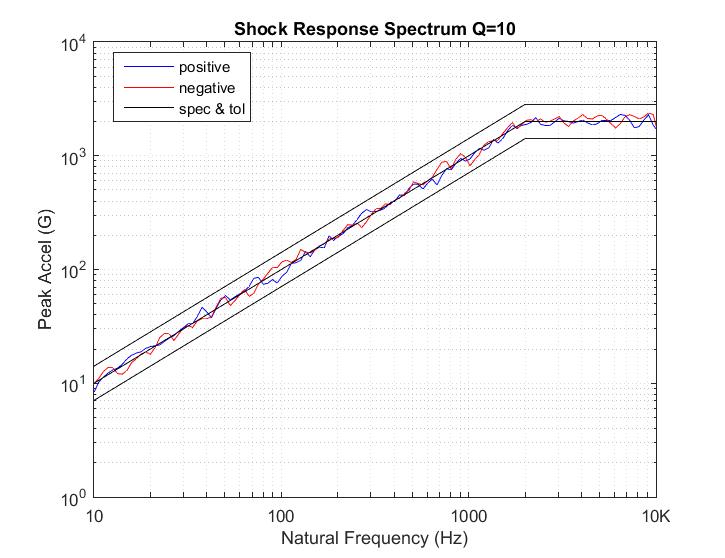
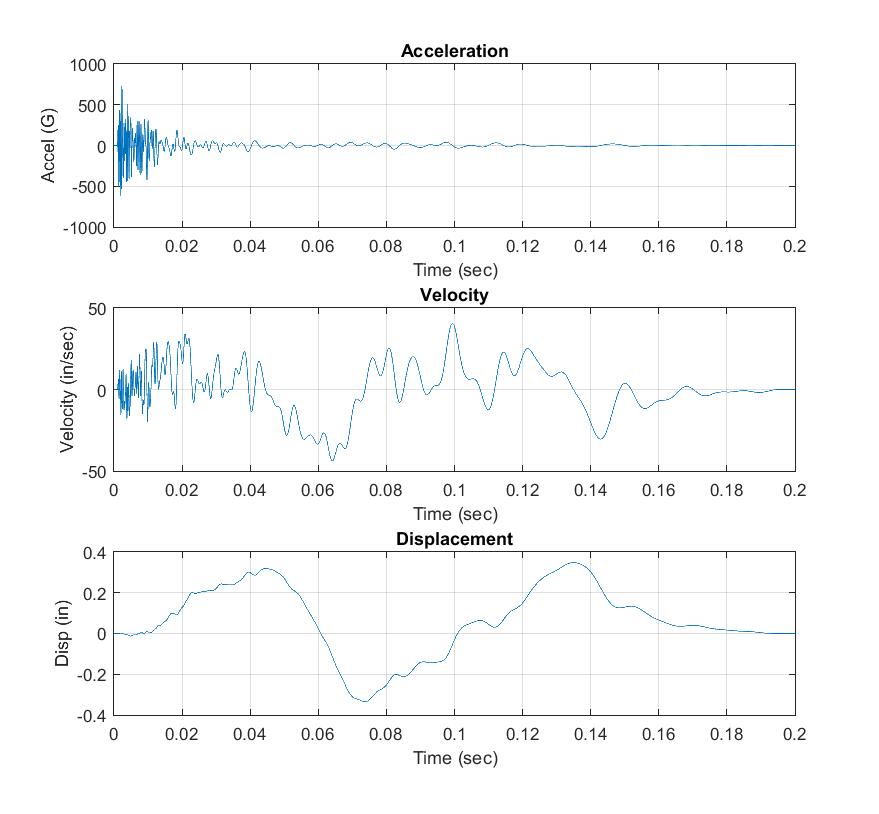
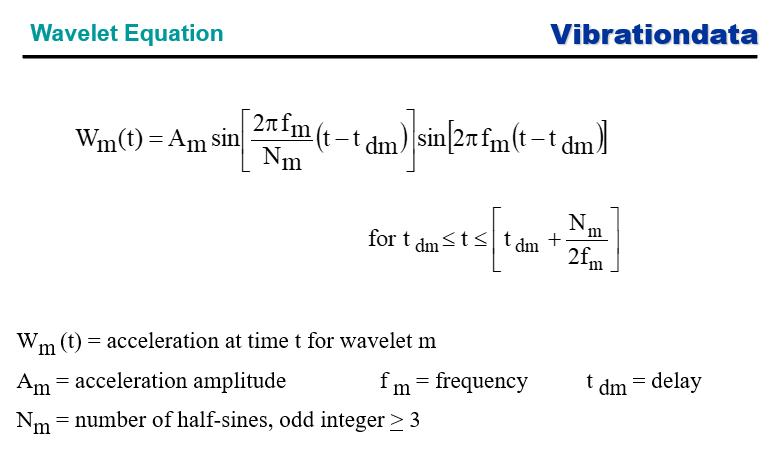
The equation for an individual wavelet is shown in the slide. It was purposely derived such that the corresponding velocity and displacement time histories each has a net value of zero. The net value is the ending value. The synthesized acceleration time history is a summation of individual wavelets.
Hi,
I would like to ask how you obtaining velocity and displacement â by integration I guess? Where is it done in Matlab?
If yes. After second integration velocity to displacement there is integration time constant appears. It has hige influence
In displacement. How the constant is removed before integration of the velocity to obtaining displacement.
We’ve also done this, and if we don’t remove the constant, we won’t get any meaningful results.
Additionally we have to do it twice because in the first figure we have measure with gravity constant
With has to be removed first before integration to velocity.
if we remove the constant we get good results.
We do it in Python.
Regards,
Leszek Flis
By constant do you mean a DC value in the acceleration waveform? Sum of wavelet synthesis properly done has zero velocity and displacement; no DC offset.